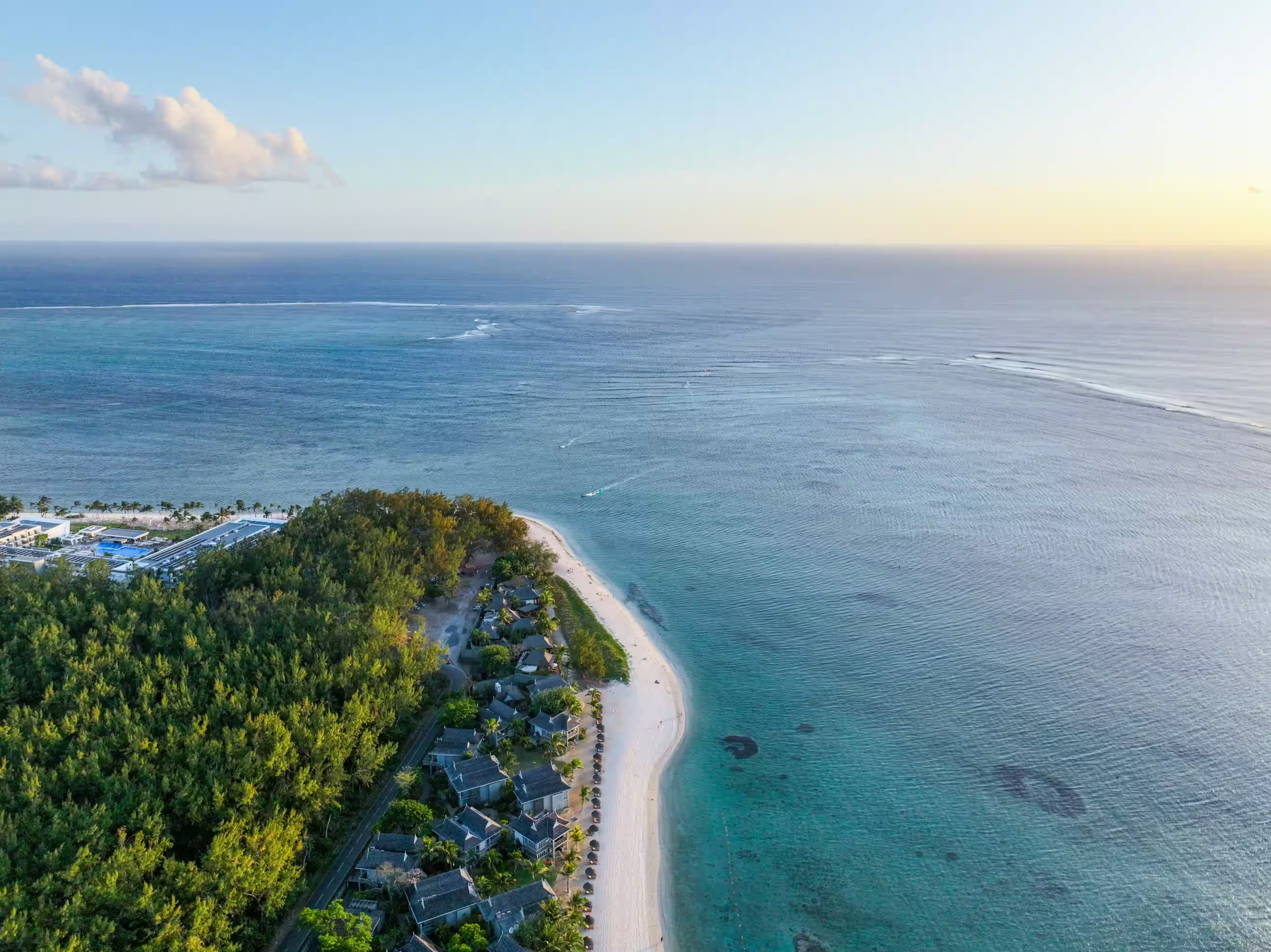

Zanzibar Island
An ancient Arab trading port floating in turquoise water. Cloves and cardamom on warm trade winds. UNESCO Stone Town built on a thousand years of cultural exchange. The most beautiful beaches in East Africa. Zanzibar is not a beach destination. It is a world.
Stone Town, ocean, spice, and sand
— each completely different

Stone Town &
A Thousand Years of Trade
Stone Town is the most intact Swahili trading city in East Africa and the physical product of a thousand years of Arab, Indian, Portuguese, and African cultural exchange. The narrow streets are deliberately built for donkeys rather than vehicles — walking them with Grace, Tanzania Adventure's Zanzibar guide who grew up within its walls, is to move through living history rather than a museum.
The carved wooden doors with their brass studs — each door a statement of the owner’s origin, religion, and status — the coral rag walls that turn amber in the evening light, the Old Slave Market and the Anglican cathedral built directly on its site: these are not historical reconstructions. They are a living city that continues to operate as it has for centuries while adapting to the modern world on its own terms.
Tanzania Adventure’s Stone Town walk is conducted in Kiswahili by Grace — born within the town’s walls — with real-time translation. The conversations are with community members she has known for decades, not with tourist-facing representatives. The House of Wonders. Forodhani market. The Aga Khan mosque. The Hamamni Persian Baths. A full day produces a depth of cultural understanding unavailable from any guided tour conducted in English.

Mnemba Atoll &
The Indian Ocean at Its Best
The Mnemba Atoll marine conservation area on Zanzibar’s northeast coast holds some of the best diving and snorkelling in the Western Indian Ocean. The atoll’s protected status means the reef fish populations are intact in ways that no longer exist at comparable unprotected sites — grouper, trevally, and snapper in pre-exploitation densities.
Sea turtles are reliably encountered on every Mnemba dive or snorkel. Spinner dolphin pods of 50 to 200 individuals are present throughout the year and regularly approach boats and snorkellers. Humpback whales migrate through the channel from July through October — surface sightings from the dive boat are regularly reported.
The atoll is accessible only to day-trippers by small boat and to guests of the single exclusive camp on the islet — a restriction that maintains the quality of the marine environment. Tanzania Adventure arranges day-trip access from North Zanzibar accommodation and can book the exclusive camp for clients who want the most intimate Mnemba experience.

Nungwi & Kendwa —
The Classic Zanzibar Beach
The north coast of Zanzibar — Nungwi village and Kendwa beach — is oriented to face northwest, giving it calm, swimmable water year-round regardless of the southeast trade winds that make the east coast choppy from June to September. The beach is white coral sand, the water shifts from turquoise to cobalt in the afternoon light, and the traditional dhow-building yard at Nungwi is one of the last places in East Africa where the ancient craft is still actively practised.
Nungwi fishing village adjacent to the beach resort area provides a genuine community context for the beach stay — the fishing boats going out at dawn, the market in the village in the morning, the call to prayer from the mosque that predates the hotels by 400 years. Tanzania Adventure arranges accommodation with context: lodges that face the ocean with the village behind rather than hotels that insulate from it.
The Tanzania Adventure sunset dhow cruise departs from the Nungwi beach at 5pm — a traditional wooden dhow crewed by local fishermen navigating by tidal knowledge and landmark, not instruments. Fresh seafood grilled on the dhow, arriving at sunset, the Zanzibar skyline silhouetted behind.

Paje Beach &
World-Class Kitesurfing
Paje and Jambiani on Zanzibar’s southeast coast are internationally recognised kitesurfing destinations. The southeast trade winds deliver consistent 15 to 25 knot conditions from June through September. The shallow lagoon behind the outer reef provides ideal learning conditions — flat water, consistent wind, and professional schools operating year-round from the Paje beach.
The east coast atmosphere is noticeably different from the tourist-heavy north. Jambiani in particular remains a genuine fishing village with the resort area occupying only a fraction of the beach — the dhow fleet, the seaweed farmers working the tidal zone, and the village market all coexist with the accommodation.
Tanzania Adventure arranges east coast programmes for clients specifically targeting kitesurfing, for honeymooners wanting the quieter atmosphere, and for photographers seeking the dramatic tidal-flat photography available only on the east coast during low tide.
Six Reasons to
Stay Longer


Planning Your
Zanzibar Stay
More Than a Beach
Zanzibar is almost always reduced to its beaches in travel writing. The beaches are genuinely exceptional — among the most beautiful in Africa. But they represent one-fifth of what the island offers, and treating Zanzibar as a beach destination misses what makes it one of the most layered and historically resonant destinations in the world.
The island has been a centre of Indian Ocean trade for over a millennium. Arab traders established the first permanent settlement in the 9th century. Portuguese control followed in the 16th century. The Omani sultanate moved its capital to Zanzibar in the 19th century, making it the wealthiest trading city on the East African coast and the primary node in the global clove and ivory trade. British influence arrived later in the century. The physical result of all this history is Stone Town — a UNESCO World Heritage Site that is genuinely irreplaceable in its combination of architectural traditions.
How Long to Stay
Three nights is the minimum for a meaningful Zanzibar stay. One night in Stone Town for the cultural visit, two nights at a beach location for ocean activities. Four to five nights is ideal — it allows the relaxed pace that Zanzibar rewards. The island reveals itself slowly and the transition from the bush to the ocean is itself a process that takes a day to complete. Tanzania Adventure does not recommend compressing Zanzibar into fewer than three nights.
Which Part of the Island
For most clients Tanzania Adventure recommends splitting the stay between Stone Town (one night) and one of the beach areas (remaining nights). For beach location, the recommendation depends on season and activity preference. North coast (Nungwi, Kendwa) is calm and swimmable year-round. East coast (Paje, Jambiani) is best for kitesurfing (June–September) and has a more authentic, quieter atmosphere.
Getting to Zanzibar
Zanzibar is served by scheduled flights from Kilimanjaro International Airport (1 hour), Dar es Salaam (25 minutes), and Nairobi (1.5 hours). Tanzania Adventure arranges all transfer logistics, including the connection from any northern circuit safari. The domestic flight routing from Kilimanjaro to Zanzibar via Dar es Salaam adds approximately 90 minutes to a direct charter, but scheduled flights are significantly cheaper and run reliably. For time-sensitive honeymoon programmes, Tanzania Adventure uses charter flights when schedules require.
The Spice Context
Zanzibar’s identity as the Spice Island is not historical marketing — it is still a functioning agricultural identity. The island produces vanilla, cardamom, cinnamon, black pepper, and cloves. Zanzibar was once the world’s largest clove producer — a trade that made it the most valuable colonial possession in East Africa and attracted successive foreign powers across five centuries. Tanzania Adventure’s spice farm tour visits working plantations in the central island hills where all five crops are grown and processed. The experience of tasting vanilla straight from the pod, or scratching a cinnamon tree to release the volatile oil, connects the present-day agriculture to the historical significance in a way that no amount of reading can replicate.
Practical Information
Zanzibar is a semi-autonomous region of Tanzania — your Tanzanian visa covers entry without a separate permit. Local currency is Tanzanian Shillings; US dollars are widely accepted at tourist establishments. The official language is Kiswahili; English is spoken at all tourist-facing establishments. The electricity supply is 230V (same as UK). Water quality at beach resorts is safe for teeth-brushing; bottled water recommended for drinking.
Conservation: Jozani Forest
Jozani Chwaka Bay National Park in central Zanzibar protects the last significant stand of indigenous forest on the island and the only wild population of the Zanzibar red colobus — a species found nowhere else on Earth. Tanzania Adventure includes a Jozani half-day for clients with an interest in endemic primates. The forest walk is guided by park rangers and the colobus monkeys are habituated to visitors — approach distances of 2 to 3 metres are normal.