

Sunrise Balloon Safari
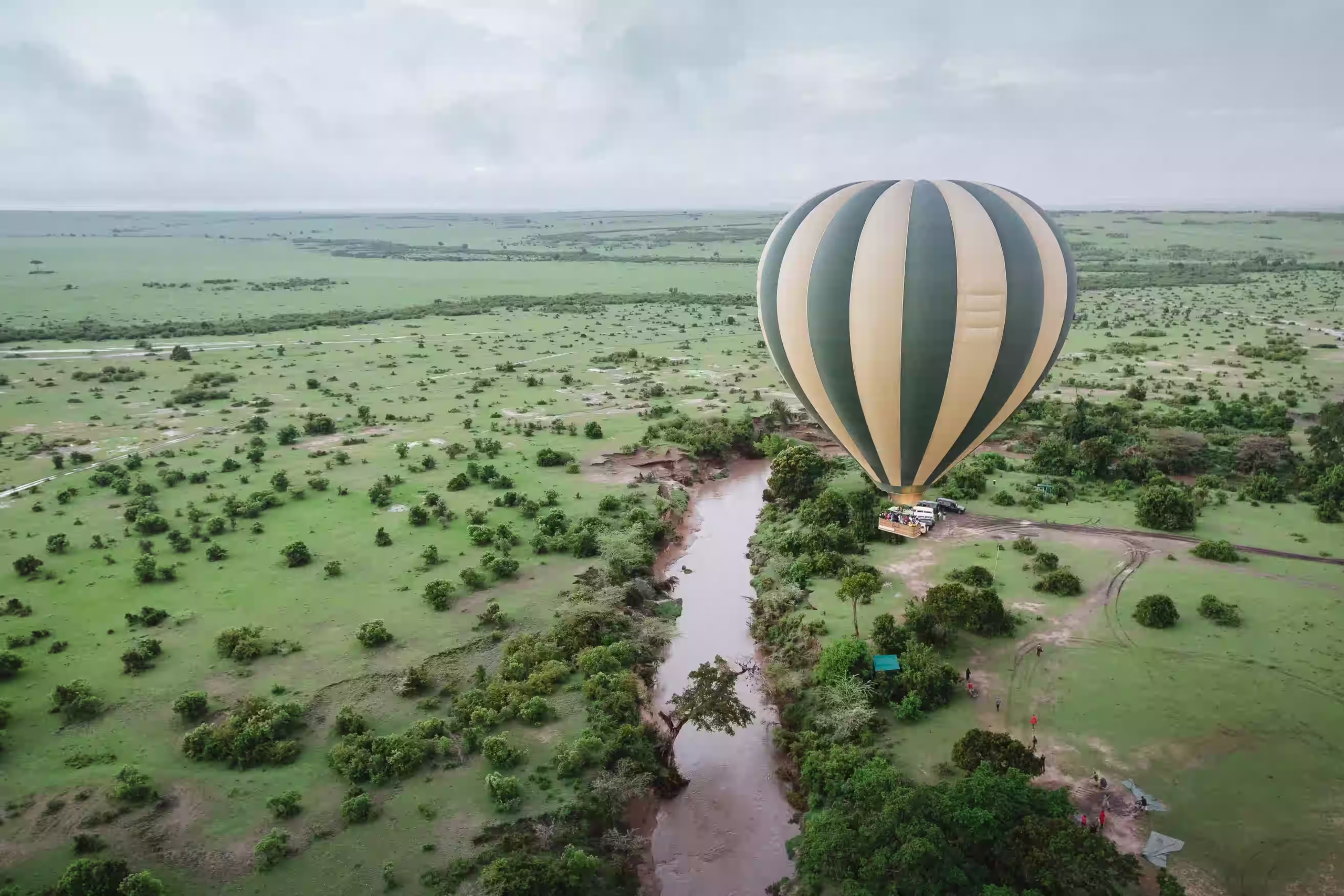
One hour above the Serengeti at first light. 1.7 million wildebeest spread across the plains below. The Mara River silver through the grassland. The horizon showing the curvature of the Earth. Then champagne and a four-course breakfast on the plains.
Every phase of the balloon experience
is unlike anything else

Inflation &
The Ground Falls Away
The balloon departs in darkness — 5:30am, stars entirely visible, the dawn a faint orange line on the eastern horizon. The inflation takes 20 minutes: the envelope fills slowly, the burner fires in controlled pulses, and the balloon rises to vertical over the gondola. You climb in total silence.
The gondola lifts. The ground drops away at walking pace. Within 60 seconds, the camp fires are visible as orange points below, and the Serengeti opens in every direction. There is no engine noise. The only sound is the occasional burner pulse from the pilot above, and the wind moving past the envelope.
The pilot communicates almost nothing for the first ten minutes. This is deliberate. The first moments in the balloon are a recalibration — of scale, of sound, of what the word "open" means. Tanzania Adventure has used the same pilot for seven years. He has made 800+ Serengeti flights and knows that silence is the correct response to the moment.

Migration at Altitude &
The Scale Reveal
At 500 metres, the first elephants are visible below, moving through the pre-dawn grey. At 1,000 metres, a lion pride on a kopje. At 2,000 metres, the migration columns are visible as dark lines on the plain to the south — wildebeest moving in streams that narrow and widen around the topography of the ecosystem.
The sun clears the horizon 35 minutes into the flight. The plains turn from grey to gold in approximately 90 seconds. The pilot descends to 50 metres. The wildebeest look up. The balloon continues at treetop level — the animals visible individually, their expressions distinct, their movement patterns legible in a way no ground-level experience allows.
The Serengeti at 5,000 metres shows its true scale. What appears from a game drive vehicle to be a vast plain becomes a canvas — the kopje outcroppings rising like islands, the Mara River snaking silver to the north, the Ngorongoro highlands on the southern horizon.
Champagne Breakfast &
Plains Picnic
Landing. The pilot communicates the landing zone to the crew vehicle 20 minutes before touchdown. By the time the gondola settles, a table is laid on the plains: white linen, glasses, four courses of breakfast prepared at camp and transported to the landing site. Champagne poured on the spot where the gondola touched.
The breakfast takes place on the open Serengeti plains — no tent, no structure, no boundary between the table and the ecosystem. Wildlife is often visible from the breakfast position. The crew brief covers the flight statistics: altitude reached, distance covered, duration aloft. The pilot signs the flight certificate.
After breakfast: a full game drive back to camp in the Tanzania Adventure vehicle, covering the prime morning activity window from 8am onwards. The balloon replaces the dawn drive — it does not replace the morning drive.

Balloon Photography &
The Aerial Perspective
The balloon provides photography conditions unavailable from any other platform — a stable, silent, elevated position with a 360-degree horizon and no vibration. In calm pre-dawn conditions, the balloon is exceptionally stable. No gyroscopic stabiliser is needed at altitudes below 100 metres in early morning air.
Wide-angle lenses capture the scale of the plains and migration columns. A 70–200mm telephoto captures individual animal groups from altitude. The most distinctive balloon photographs are typically the aerial wide-angle shots showing the ecosystem at scale — wildebeest columns from 1,500 metres, the river from above, a single kopje in a sea of grass.
Tanzania Adventure recommends bringing both a wide and a medium telephoto. Battery management: cold temperatures at altitude reduce battery performance. Keep the camera body warm inside a jacket between shots in the pre-dawn period.
The Serengeti Revealed
at Altitude


Everything About
the Balloon Safari
What Is Included
Every Tanzania Adventure balloon safari includes: pre-dawn transfer from camp to launch site, safety briefing and inflation viewing (30 minutes), 60-minute flight over the Serengeti plains, landing at a pre-determined plains site (location varies by wind), champagne and four-course bush breakfast on the plains, flight certificate signed by the pilot, and a full game drive return to camp covering the prime morning wildlife activity window from 8am onwards.
The Pilot
Tanzania Adventure works exclusively with a pilot who has over 800 Serengeti flights. The balloon safari requires both CAA licensing and deep knowledge of the Serengeti’s specific thermal and wind patterns. The pre-dawn Serengeti has particular weather characteristics — valley thermals, morning inversion layers, wind gradients between altitude bands — that take years to read with the precision required for passenger flight. Our pilot knows which mornings will produce the dramatic low-level flight over wildlife and which will require higher altitude.
Practical Details
Weight limit per passenger: 100kg. Minimum age: 7 years. Not recommended for guests with serious back or knee conditions — the landing is a controlled impact that requires standing ability. All-weather clothing is recommended: the pre-dawn departure and altitude produce temperatures 10–15°C lower than daytime ground level. Tanzania Adventure provides fleece blankets in every gondola. From $650 per person, added to any Serengeti programme at booking.
When to Book
The balloon safari is available year-round in the Serengeti. Demand exceeds availability during peak crossing season (July–September) and the calving season (January–February). Tanzania Adventure books balloon places at programme confirmation — not as an afterthought on arrival. If balloon safari is a priority for your trip, tell us at the enquiry stage so we can confirm a place before other programme decisions are made.
Migration Season vs Green Season
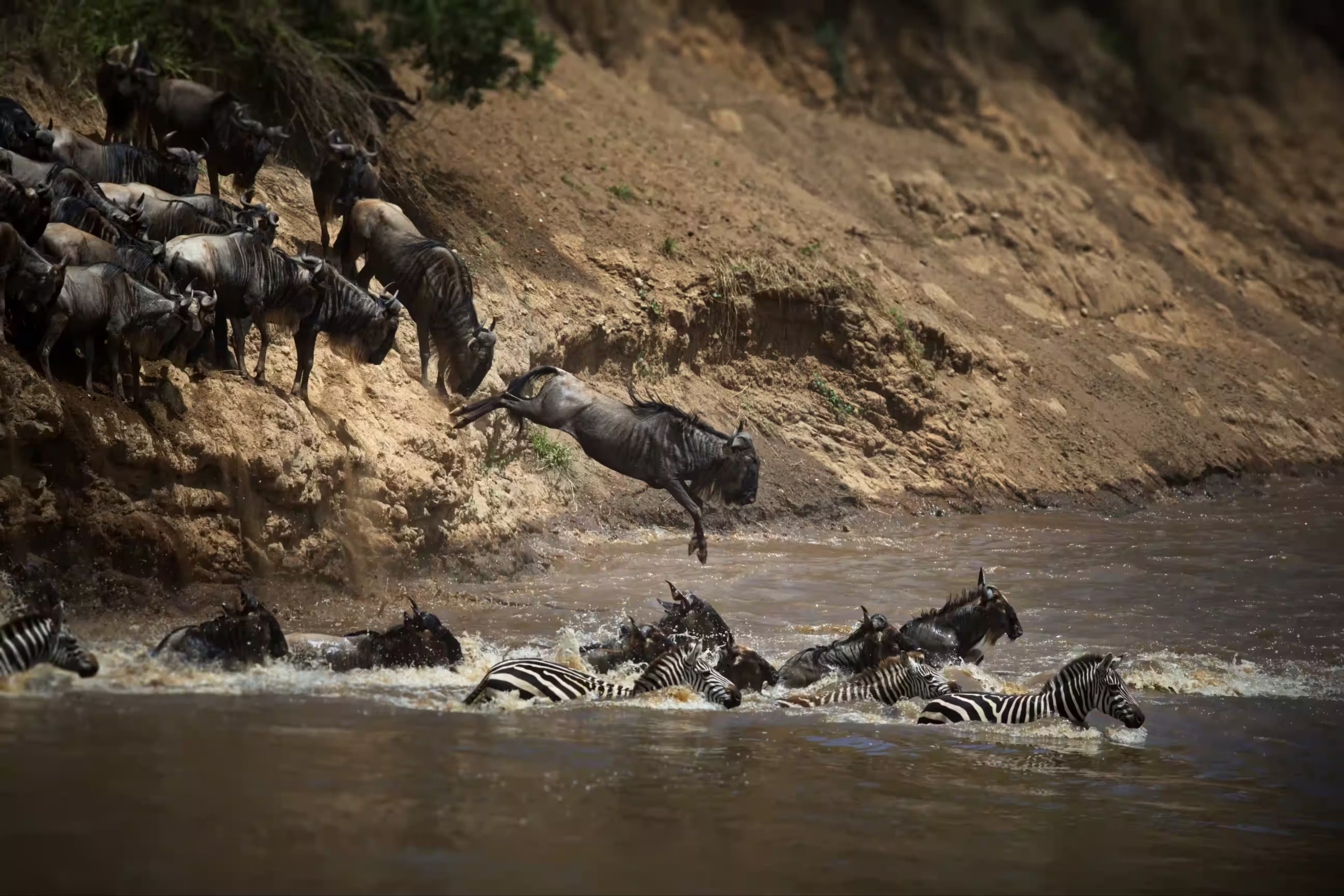
Both seasons produce extraordinary flights. Migration season (July–September) produces the most iconic images — wildebeest columns from altitude, the Mara River from above, the crossing zone geography comprehensible for the first time. Green season flights (November–May) produce the most visually dramatic landscape — the plains vivid emerald, the morning mist, the warmer diffuse light. Wildlife is less concentrated but the visual quality of the flight environment is arguably the best of any season.
Combining with Other Activities
The balloon safari replaces your dawn drive on the morning it runs — it does not replace the morning drive. The post-landing game drive covers the same prime activity window (8–11am) at ground level, meaning a balloon morning produces both aerial and ground perspective within the same programme day. Tanzania Adventure builds balloon mornings into multi-day Serengeti programmes as a specific event day rather than an interchangeable activity — we advise on which day of a multi-day Serengeti stay produces the best balloon conditions based on current herd position.