

Cultural Tanzania
Tanzania is not only parks and animals. It is 120 ethnic groups, five major religions coexisting in remarkable harmony, thousand-year-old trading cultures, and landscapes that have shaped some of the most distinctive human traditions on Earth. The wildlife is extraordinary. The people are more so.
Living culture in every direction
from Arusha to Zanzibar

Maasai Boma &
A Thousand-Year Relationship with the Land
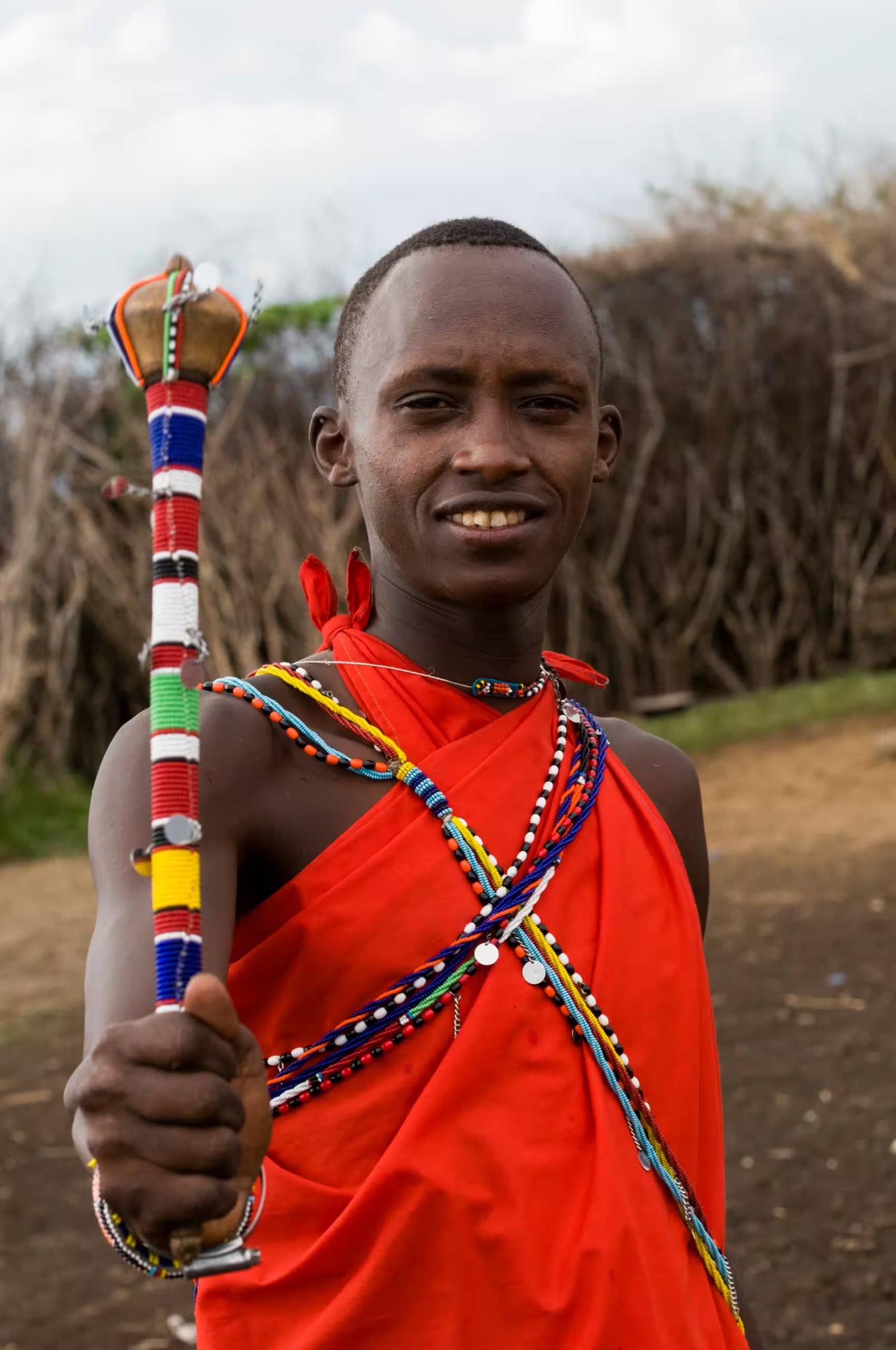
A morning at a traditional Maasai homestead on the Ngorongoro Conservation Area border, conducted in Maa by Grace — a guide who speaks the language fluently, not a guide who narrates a performance in English. The conversation covers land tenure, livestock management, and the specific relationship between Maasai herding traditions and wildlife conservation on the crater boundary.
Tanzania Adventure works exclusively with three Maasai families who have chosen to engage with tourism on their own terms. The visit fee is paid directly to the family. The conversation covers whatever the family and guests genuinely want to discuss. There is no fixed programme, no choreographed dance, no mandatory photography.
The contrast between the boma visit and the crater drive — experienced on the same day — is one of the most complete single-day encounters available in Tanzania.
Chagga Coffee &
The Farm on the Slope
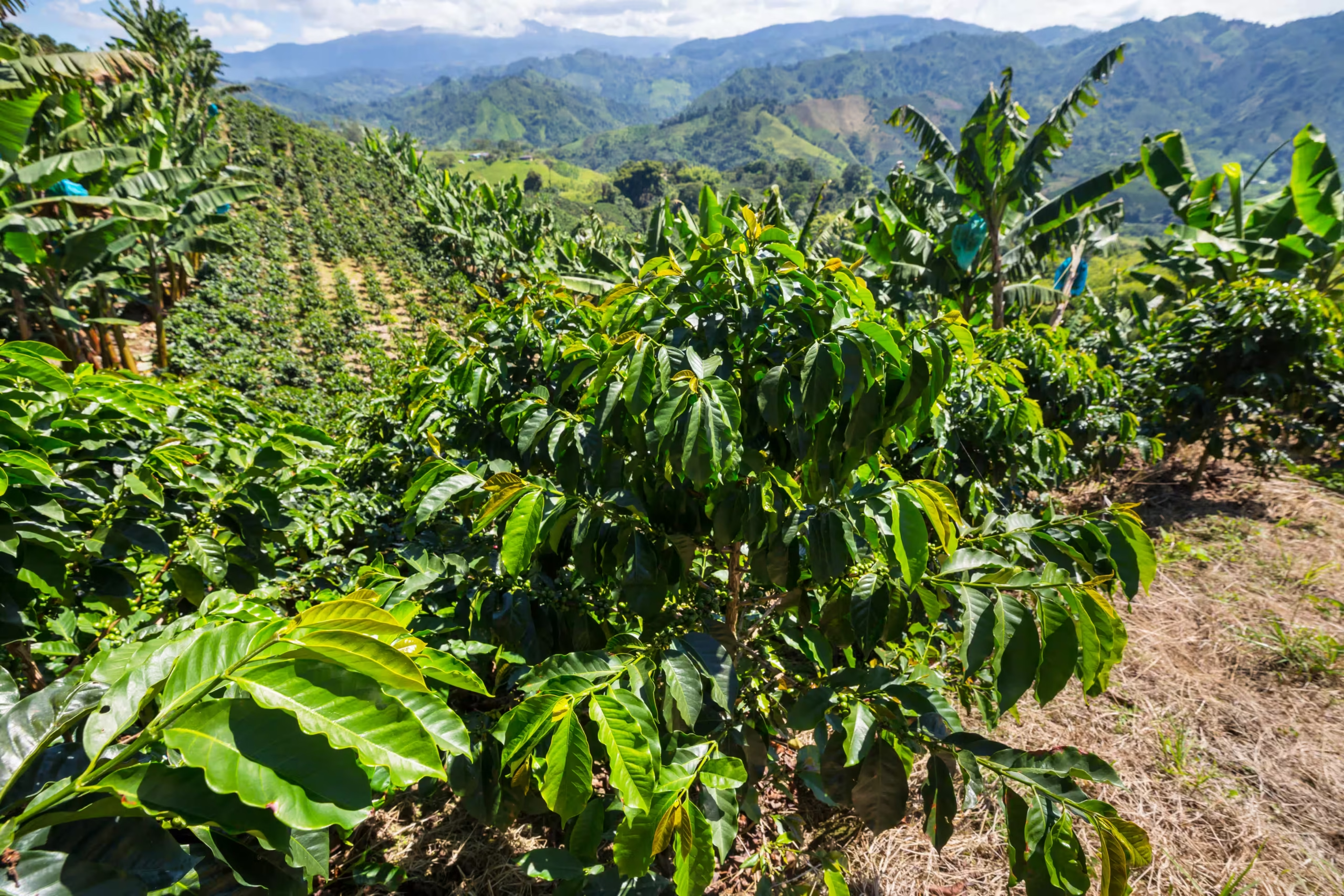
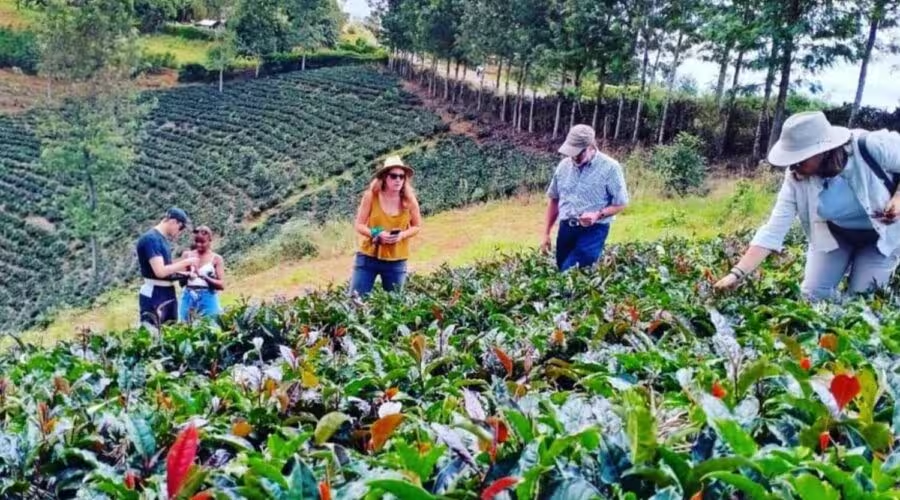
A working coffee plantation on the middle slopes of Kilimanjaro, farmed by the same Chagga family for four generations. The tour covers growing, picking, processing, roasting, and brewing — the complete farm-to-cup cycle. Kilimanjaro AA is one of Africa’s most respected coffees; understanding the agricultural sophistication of the Chagga terracing system transforms the experience from tasting to comprehension.
The Chagga developed one of Africa’s most sophisticated agricultural systems — terraced coffee and banana cultivation that has maintained soil productivity at high altitude for 400 years without irrigation infrastructure. The terrace walls are hand-built from volcanic rock. The water management is gravity-fed from higher altitude springs.
Grace conducts the farm visit in Kichagga with the farm family, translating not just words but the underlying logic of a food system that has operated continuously on the same land for 16 generations.

Stone Town &
Grace as Your Guide
Grace Laizer grew up within Stone Town’s walls. She conducts the walk in Kiswahili, translating for non-Swahili speakers while maintaining genuine conversations with community members she has known for decades. The experience is fundamentally different from an English-language guided tour — it is an introduction to a community by someone who is a member of it.
The route covers the Old Slave Market and the Anglican cathedral built directly on its site. The House of Wonders. The Aga Khan mosque. The Hamamni Persian Baths. The carved wooden door workshops still operating in the back streets. The Forodhani waterfront as preparation for the evening market.
The full-day walk ends at the Forodhani market in the evening — the most atmospheric street food experience in Africa. Grace navigates the stalls with the authority of someone who grew up eating at them.

Spice Farm &
The Island’s Identity
A working spice plantation in the central island hills. Vanilla pods on the vine, freshly harvested cloves, tumeric at root level, black pepper, cardamom, cinnamon. The relationship between Zanzibar’s agricultural identity and its history as the world’s most important spice trading node becomes tangible when you taste vanilla straight from the pod.
The farm tour is conducted by a third-generation spice farmer whose family has grown all five of Zanzibar’s signature crops continuously since the 1890s. The context is agricultural, historical, and culinary simultaneously. Grace provides translation and cultural interpretation throughout.
Arusha Cultural Centre &
Art as Explanation
The Cultural Heritage Centre in Arusha houses the most comprehensive collection of Tanzanian art, craft, and artefact available in a single location. Tingatinga paintings, Makonde sculptures, Maasai beadwork, Zaramo fertility carvings, Swahili carved furniture — the complete visual vocabulary of Tanzanian artistic tradition across a dozen ethnic groups.
Tanzania Adventure arranges a gallery briefing by a curator from the centre for every visit — this converts what would otherwise be a shopping experience into a cultural education. The Makonde sculpture room alone requires 40 minutes to understand at the level the work deserves.

Forodhani Market &
The Living Kitchen
The Forodhani waterfront market, operating nightly in Stone Town, is one of the great street food experiences in Africa. Zanzibar mix — crispy dough with coconut chutney. Urojo soup. Fresh seafood grilled over charcoal. Sugarcane juice pressed while you watch. Grace navigates the stalls with the authority of someone who grew up eating at them. The market begins at dusk and runs to midnight.
The Forodhani market is best experienced with Grace — who knows which stalls have operated for three generations, which dish was introduced by Omani traders in the 17th century, and which vendor’s Zanzibar pizza has been the most-sought version on the island for 40 years.
Six Encounters That
Change the Context


Cultural Tourism
Done Right

Tanzania Adventure’s Approach
Cultural tourism in Tanzania has a long and complicated history of exploitation — communities receiving minimal benefit from visitor fees, performances staged for tourists with no connection to actual cultural practice, and guides who speak no local language and treat community visits as photo opportunities. Tanzania Adventure works exclusively with communities where the guide speaks the local language fluently, the visit is conducted with the community’s full participation and benefit-sharing, and the activity has been designed by community members rather than imposed by operators.
We do not operate cultural visits where the primary purpose is photography of people in traditional dress. We operate visits where the primary purpose is genuine exchange — conversations between people with different relationships to the same landscape, translated honestly by a guide who belongs to that landscape.
Grace Laizer
Grace Laizer is Tanzania Adventure’s cultural specialist. She holds an MA in Cultural Anthropology from the University of Dar es Salaam, was born in Stone Town and grew up on Zanzibar, and has been conducting cultural programmes with Tanzania Adventure since 2011. She speaks Kiswahili, Maa (Maasai), Kichagga, English, and conversational Italian. She designed the Maasai boma programme with the families involved and maintains the relationships that make the visits genuine rather than performative.
The Maasai Partnership
Tanzania Adventure’s Maasai boma visits operate with three families on the Ngorongoro Conservation Area border who have chosen to engage with tourism on their own terms. The visit fee is paid directly to the family — not to a third-party agency or a park authority. The conversation covers whatever the family and guests are genuinely interested in discussing; there is no fixed programme and no performance sequence. The elder speaks in Maa. Grace translates every word, not a summary.
School and Community Projects
Tanzania Adventure contributes 12% of all bookings to community projects including school infrastructure in Ngorongoro border villages and a water point programme in the Tarangire buffer zone. Clients may visit these projects as part of their itinerary — this is not a ceremonial visit but an operational one, where you meet the people who manage the project and see the infrastructure your safari contributed to. The school project in Endulen village has funded three classrooms since 2018.
Ethical Photography
Tanzania Adventure provides all cultural tour clients with a photography briefing before departure. The core principle: ask before you photograph, accept no without recourse. The subject has the right to decline, and that right supersedes any client’s desire for a particular image. The most powerful cultural photographs typically emerge from genuine interaction rather than posed arrangement.