Tanzania 2000 Adventure

Mahale Mountains Lake Tanganyika
Chimpanzee trekking Mahale
Home/Destinations/Mahale Mountains
Western Tanzania · Lake Tanganyika · Chimpanzee Research Site

Mahale Mountains

A remote forest on the shore of Lake Tanganyika. Six habituated chimpanzee communities studied since 1965. The most significant primate encounter in Africa. Accessible only by air and boat. Sixty years of research. A place that changes how you understand what you are.

1,613 km²
Park Area
1,000+
Chimpanzees
60 yrs
Research History
6
Habituated Communities
The Mahale Experience

Forest, lake, and the closest
encounter with our nearest relatives

Chimpanzee Trekking Mahale
Primary Experience · Forest Trek

Chimpanzee Trekking &
The Encounter That Changes Things

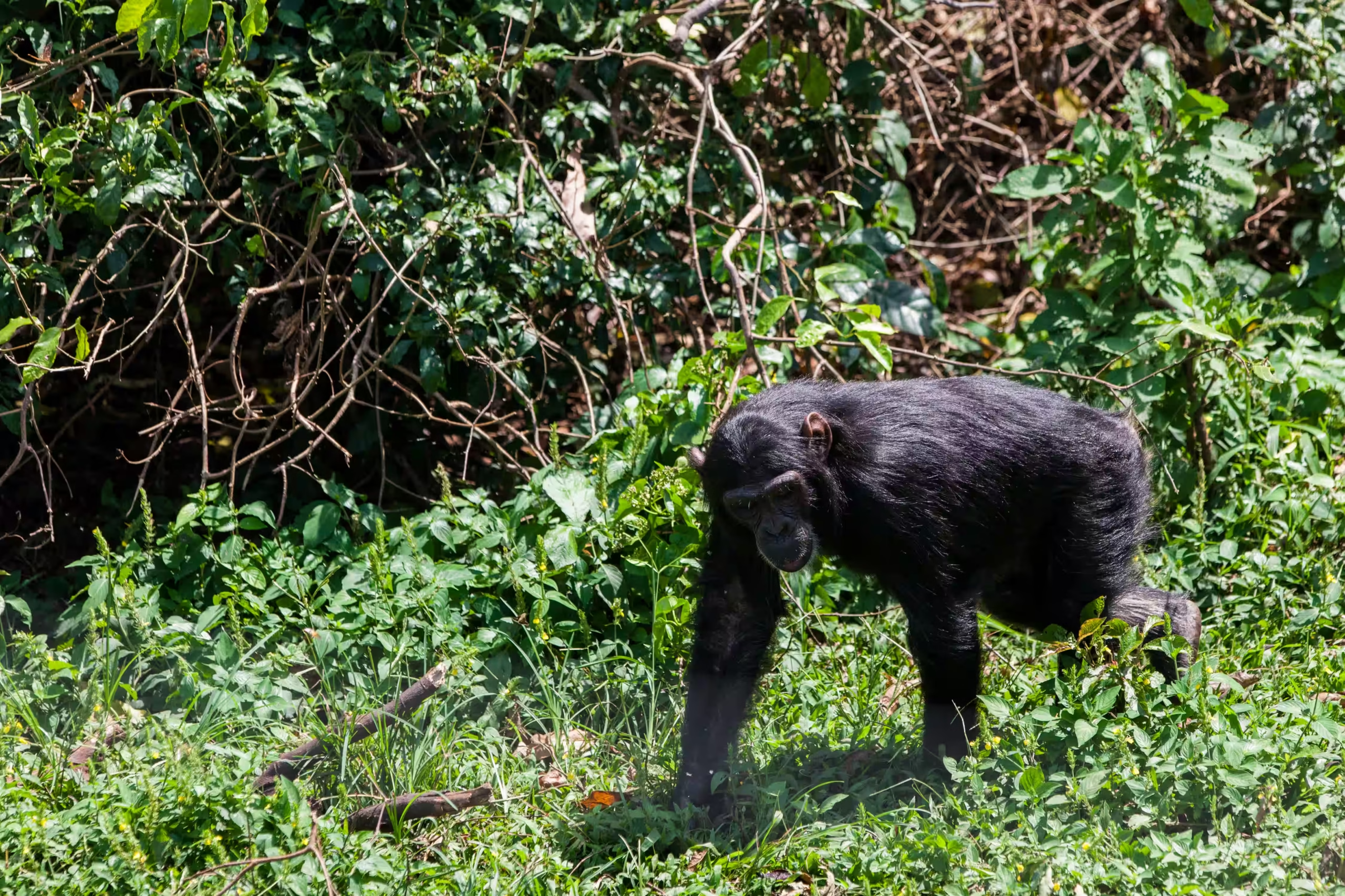
The Mahale chimpanzees have been studied by Japanese researchers from Kyoto University since 1965 — over six decades of continuous contact that has produced animals completely unaffected by human presence. The minimum observation distance is 7 metres per park regulations, but habituated individuals frequently approach to 3 metres out of apparent curiosity. The experience of a chimpanzee making direct, sustained eye contact — with evident intelligence assessing what it is looking at — produces a response in most visitors that they struggle to adequately describe.

The research programme has documented chimpanzee tool use, medicinal plant consumption, warfare between communities, cultural transmission of behaviours, and complex political alliances within hierarchies. Tanzania Adventure’s briefing at the camp the evening before the trek covers the specific community being visited the following morning — the current alpha male, the family groupings, the behaviours that are most likely to be observed at that time of year.

The trek takes between 30 minutes and 4 hours depending on where the community is in the forest. Tanzania Adventure works with the Mahale Mountains National Park researcher team to access the most current community location data. Maximum group size per trek is six visitors. Each community may only be visited by one group per day. This controlled access is the management decision that has maintained the chimpanzees’ health and behaviour quality for 60 years.

6m Approach (7m Minimum)Max 6 Visitors1 Group Per Community DailyMorning Trek60-Year Research Base
Tanganyika Cichlid Fish
Lake Tanganyika · Africa's Deepest Lake

Lake Tanganyika &
Freshwater Snorkelling

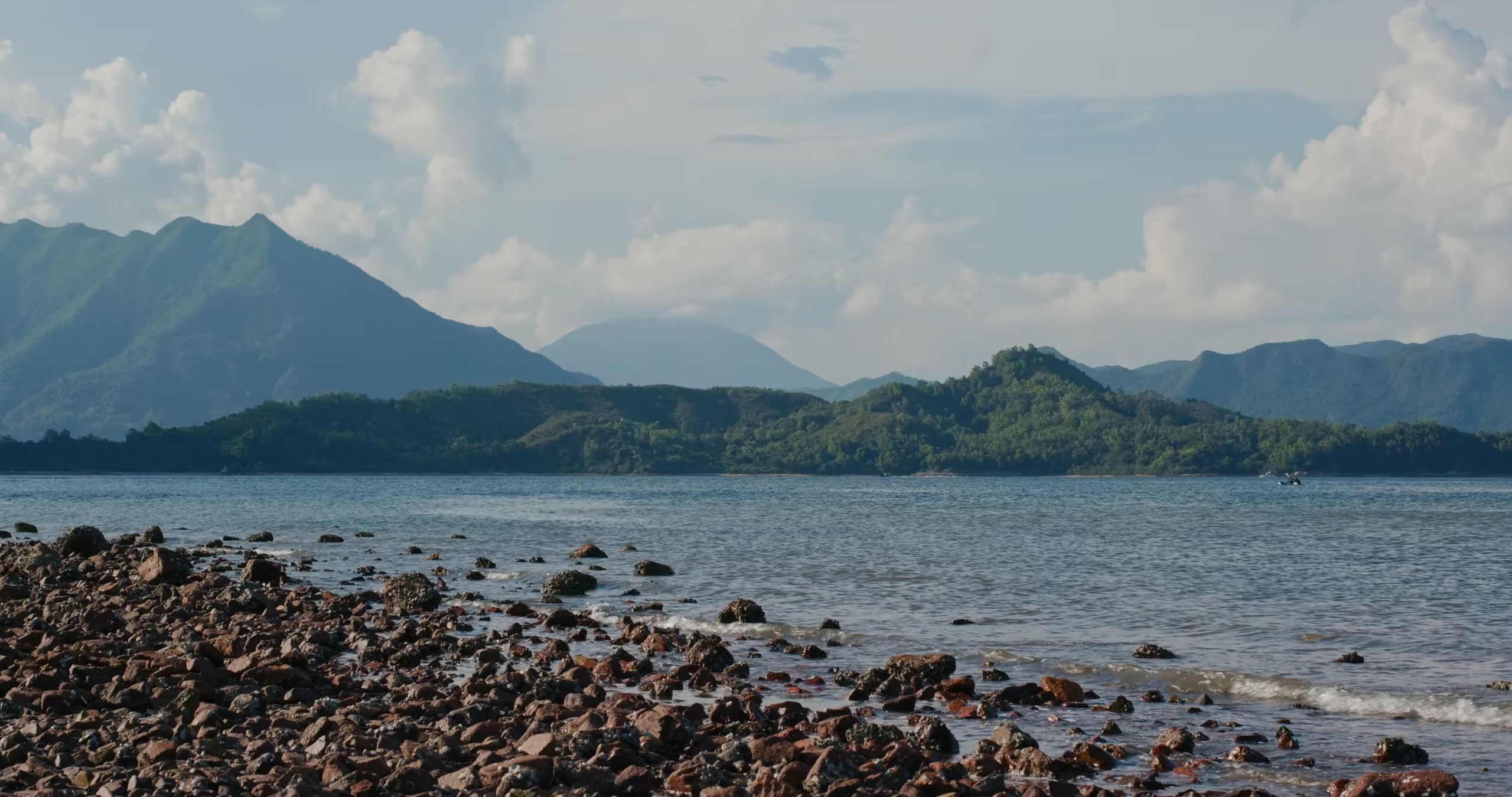
Lake Tanganyika is Africa’s deepest lake and one of the world’s most ancient, holding water that has been here for 9 to 12 million years. The lake’s extraordinary age has produced 250+ species of cichlid fish found nowhere else on Earth — a freshwater equivalent of the Galápagos. Snorkelling in the crystal-clear shallow water of the Mahale beach reveals this endemic fish community in a visibility that rivals marine locations.

The beach at Mahale is the juxtaposition that makes this destination unique in Africa: in the morning you track chimpanzees through mountain forest at altitude; in the afternoon you swim in a lake so clear you can see the bottom at 8 metres. The kayaking programme allows guests to paddle along the coastline and through the shallow bays where the endemic cichlids concentrate in the shallows.

The lake is also the setting for the most atmospheric sunrise in Tanzania Adventure’s entire programme portfolio. The sun rises over the Congolese mountains on the opposite shore — 50 kilometres across the water — with the forest behind the camp still dark and the chimpanzees audible from the beach. Tanzania Adventure wakes clients for this view at 5:30am before the morning trek.

250+ Endemic FishFreshwater SnorkellingKayakingLake SwimmingCongo Views
Forest Bird Walks Mahale
Mountain Forest · Birding

Forest Birding &
Mountain Endemics

The montane forest of Mahale supports a bird community distinct from any other Tanzania park. The combination of primary forest, lakeside vegetation, and mountain altitude produces species unavailable in the savanna parks of the north and south. On any morning walk not tracking chimpanzees, the forest trail produces 30 to 50 species, including sunbirds in breeding plumage, African broadbill, and a range of forest robin species.

Tanzania Adventure’s forest guide at Mahale has been recording birds here for nine years and maintains a camp bird list that currently stands at 178 species. For birding visitors, the Mahale forest walk can be oriented specifically around the endemic and near-endemic species — with the chimpanzee trek reserved for the following morning when both programmes fit the schedule.

The forest trail above the camp also provides the best elevated view of Lake Tanganyika from any point accessible without mountaineering equipment — the lake and the Congolese escarpment visible together from 1,200 metres above the shore.

178 Species Camp ListMountain Forest SpecialistsSunbirdsAfrican BroadbillCombined with Chimp Trek
Tongwe Village Lake Tanganyika
Local Community · Tongwe People

Tongwe Village &
Lake Tanganyika Culture

The Tongwe people have lived along the Mahale coastline for generations — their fishing culture pre-dates the national park by centuries. Tanzania Adventure arranges a half-morning visit to the nearest Tongwe fishing village, which provides employment in the park camp system and participates directly in the park’s benefit-sharing mechanism.

The visit includes the morning fish market at the boat landing, a conversation (with translation) with one of the elder fishermen about the changes in the lake fish population over 50 years — a perspective on conservation from a human who has witnessed it directly — and an opportunity to see the hand-built wooden fishing boats still constructed using traditional techniques.

Tanzania Adventure’s community visit is not a performance. The guide who leads it, Emmanuel Ntunda, grew up in this village and moved into the park as a guide after completing his training. The conversation he facilitates between guests and community elders is genuine, not staged, and the questions guests ask in a Mahale community context are different from any other cultural visit in our programme.

Tongwe Fishing CommunityMorning Fish MarketBoat BuildingConservation ContextEmmanuel Ntunda Guide
When to Visit

Mahale Through
the Year

01
January
Year-Round
Chimpanzees present. Wet season forest lush. Lake calm.
02
February
Year-Round
Good conditions. Forest active. Lake swimming pleasant.
03
March
Rains Begin
Rains arriving. Chimpanzees present. Forest muddy.
04
April
Long Rains
Heaviest rains. Chimps present but trek harder. Beautiful forest.
05
May
Rains Easing
Improving. Good conditions resuming. Lush forest.
06
June
Dry Season Begins
Excellent conditions. Lake calm. Full programme available.
Peak
07
July
Peak Dry Season
Best overall conditions. All activities excellent.
Peak
08
August
Peak Season
Optimal. Chimps frequently at lower altitude. Lake clear.
Peak
09
September
Excellent
Continued peak. Chimps active at lake level.
10
October
Short Rains Begin
Still good. First light rains. Chimps present.
11
November
Short Rains
Rains light. Chimps accessible. Forest beautiful.
12
December
Year-Round
Christmas visits possible. Chimps present. Good conditions.
The Mahale Experience

Forest, Lake, and the
Closest Encounter in Africa

Chimpanzee Mahale Mountains
60 Years Habituated
Chimpanzee
Direct eye contact at 3 metres with an animal that has been studied for 60 years. The most emotionally significant wildlife encounter in Africa.
Cichlid Fish Lake Tanganyika
250+ Endemic Species
Cichlid Fish
Freshwater snorkelling with fish found nowhere else on Earth. Crystal visibility at the Mahale shoreline.
African Broadbill Mahale Forest
Mountain Forest
African Broadbill
Forest endemic. Mountain altitude habitat. Present on guided forest walks and visible from the camp clearing at dawn.
Red Colobus Monkey Mahale
Colobus Encounters
Red Colobus Monkey
Habituated troops in the forest canopy above the camp trail. Often encountered on the approach to the chimpanzee tracking area.
African Fish Eagle Lake Tanganyika
Lake Tanganyika
African Fish Eagle
Resident pair above the camp bay. Dawn calls echo across the lake to the Congo escarpment. Present on every morning.

The alpha male sat two metres from our group for eleven minutes. Looking at each of us in turn. I am a secondary school biology teacher. I have been trying to explain the concept of shared ancestry for twenty years. That eleven minutes did it better than every lesson I have ever taught.

Janet M., Edinburgh — Mahale Mountains, August 2024
Suggested Itineraries

Mahale
Programmes

4
Dedicated · 4 Nights
Mahale Mountains Focus
Day 1
Fly to Mahale via Tabora — afternoon lake kayak and orientation
Day 2–3
Two chimpanzee trekking mornings — forest birds, lake snorkelling afternoons
Day 4
Dawn lake sunrise, village visit — fly out mid-morning
View full itinerary
12
Southern Circuit · 12 Nights
Ruaha, Nyerere & Mahale
Day 1–3
Ruaha — lion, wild dog, river concentration
Day 4–6
Nyerere — boat safari on Rufiji
Day 7–10
Mahale — four chimpanzee trekking days
Day 11–12
Mafia Island — whale sharks, reef diving
View full itinerary
5
Honeymoon · 5 Nights
The Remote Lake Programme
Day 1–5
Mahale — chimpanzees, lake kayaking, forest walks, total seclusion
View full itinerary
3
Extension · 3 Nights
Mahale added to any Programme
Day 1
Fly from any Tanzania airport via Tabora — afternoon arrival
Day 2
Full chimpanzee trekking day with forest bird walk
Day 3
Dawn sunrise, morning lake snorkel — fly out
View full itinerary
Who This Is For

Mahale Mountains for
Every Kind of Traveller

Whether you are celebrating a honeymoon, discovering Africa for the first time, or returning for the experience you know only Tanzania delivers.

Most Significant Encounter
Wildlife Enthusiasts

The most emotionally significant wildlife encounter available in Africa. Eye contact with a habituated chimpanzee that has been in continuous contact with researchers for 60 years.

6 habituated communities — 60 years of research, maximum 6 visitors per community per day
Tanzania Adventure pre-trek briefing covers the research context: the encounter becomes a story, not a sighting
Individual chimpanzee history and social position explained before the trek — you know who you are about to meet
Remote Honeymoon
Honeymooners

The most remote and private honeymoon destination in Tanzania Adventure's programme. Forest, lake, chimpanzees, and no more than 12 other guests on the entire island.

Tanzania Adventure Mahale honeymoon: single-camp booking, maximum 12 other guests possible
Sunrise over Lake Tanganyika from the beach — the Congo mountains 50km across the water
Seamless Zanzibar extension from Mahale: the most dramatic contrast in Tanzania's honeymoon programme
Most Remote
Adventure Travellers

12 hours from Arusha to camp. Primary forest. Wild chimpanzees. Lake Tanganyika at 9 million years old. Mahale is the most remote accessible destination in Tanzania.

Charter flight via Tabora + lake boat: the transfer is part of the experience
Forest trek: 30 minutes to 4 hours on primary mountain trail — the chimps move, the guide follows
The remoteness is deliberate — it is what has preserved the chimpanzee community for 60 years of research
Forest Photography
Photography Travellers

Habituated chimpanzees at 3-metre range in primary forest light. The most technically demanding and visually rewarding wildlife photography in Tanzania.

Guide positions for the best available forest light angle — canopy openings produce the key moments
Habituated animals: no alarm response to camera movement, lens changes, or burst mode
Tanzania Adventure can arrange extended observation time (up to 2 hours with the community) for photography-focused clients
Solo Trekker
Solo Travellers

Solo chimpanzee trekking at Mahale. One traveller. One guide. The full attention of both on the ecosystem.

Tanzania Adventure matches solo Mahale clients with compatible small groups where trek permits allow
Private trek available for solo clients who prefer complete focus — one person in the forest
Post-trek debrief with the guide: the questions you could not ask in the group moment, answered fully
Family Primates
Families with Older Children

For children 12 and older who can handle a forest trek, Mahale produces the most lasting impression of any Tanzania wildlife experience. Meeting a chimpanzee changes what children think animals are.

Age minimum 12 — Tanzania Adventure guide assesses readiness before booking confirmation
Trek difficulty manageable for fit teenagers — Peter paces specifically for family groups
The follow-up: most Mahale family clients report that their children changed career direction within 2 years
The Complete Guide

Planning Your
Mahale Visit

Getting to Mahale

Mahale is the most remote destination in Tanzania Adventure’s programme. Access requires a charter or scheduled flight from Arusha or Dar es Salaam to Tabora (1.5–2 hours), then a connection to the Mahale airstrip (45 minutes), followed by a 30-minute boat transfer to the camp on the lake shore. Tanzania Adventure manages the entire logistics chain including accommodation in Tabora for clients requiring an overnight connection.

The remoteness is not a problem to be managed. It is a feature of the destination. The 12-hour transfer from Arusha to camp is the process by which the modern world gradually recedes and is replaced by something older and more significant. Guests who arrive at Mahale having rushed from other destinations consistently describe the transition as incomplete — Tanzania Adventure therefore schedules Mahale at the end of itineraries rather than the beginning wherever possible.

The Research Context

Kyoto University’s Mahale Mountains Chimpanzee Research Project has maintained a continuous research presence since 1965 — the longest-running chimpanzee field study outside of Gombe. The research has produced fundamental contributions to understanding of chimpanzee culture: the observation that different communities use different tools for identical tasks (a behaviour transmitted socially rather than instinctively) was first documented at Mahale and remains one of the most important findings in primatology.

Trekking Protocols

All Mahale chimp-trekking guests receive a 30-minute briefing before the trek covering the 7-metre approach rule, no-flash photography, handling of unexpected animal approaches, mask-wearing protocol (flu prevention), and the correct behaviour if a chimpanzee charges. Tanzania Adventure’s guide assists with this briefing and the park ranger who accompanies the trek enforces the protocols. The rules exist to protect the animals’ health and behaviour — and they are the reason this encounter is available after 60 years of management.

Physical Requirements

Chimpanzee trekking in Mahale is a forest hike of variable duration and terrain. The minimum fitness requirement is the ability to walk 3–6 hours on uneven forest trail at elevations between 800 and 1,400 metres. There are no technical sections. Trekking poles are available at the camp. Tanzania Adventure recommends that clients with limited walking fitness specify this at the booking stage — the guide can modify the programme to favour the shorter, lower-altitude tracking routes that typically produce community sightings with 45 minutes of walking.

The January–December Advantage

Unlike every other park in Tanzania Adventure’s southern circuit portfolio, Mahale is accessible year-round. The chimpanzees are present regardless of season and the research programme continues through the rains. The rainy season (March–May) does make the forest trails muddy and the connections through Tabora occasionally disrupted by weather, but Tanzania Adventure has successfully completed programmes in every month of the year. For clients with inflexible travel dates that fall outside the June–October dry season window, Mahale is the southern circuit park that can be reliably booked year-round.

Conservation Contribution

Tanzania Adventure contributes a per-guest fee to the Mahale Mountains Wildlife Research Centre, the facility established by the Kyoto University team that provides logistical support for the research programme and community engagement with the Tongwe fishing villages surrounding the park. The contribution funds one week of field researcher salary per Tanzania Adventure client visit. The research that makes the Mahale encounter available — 60 years of sustained presence that has produced the habituated communities — is ongoing and requires sustained funding.

Trek Into
Mahale Forest

The most remote. The most significant. The encounter that produces the clearest understanding of what you are. Tell us your dates.

Loading itinerary…
Saved Trips