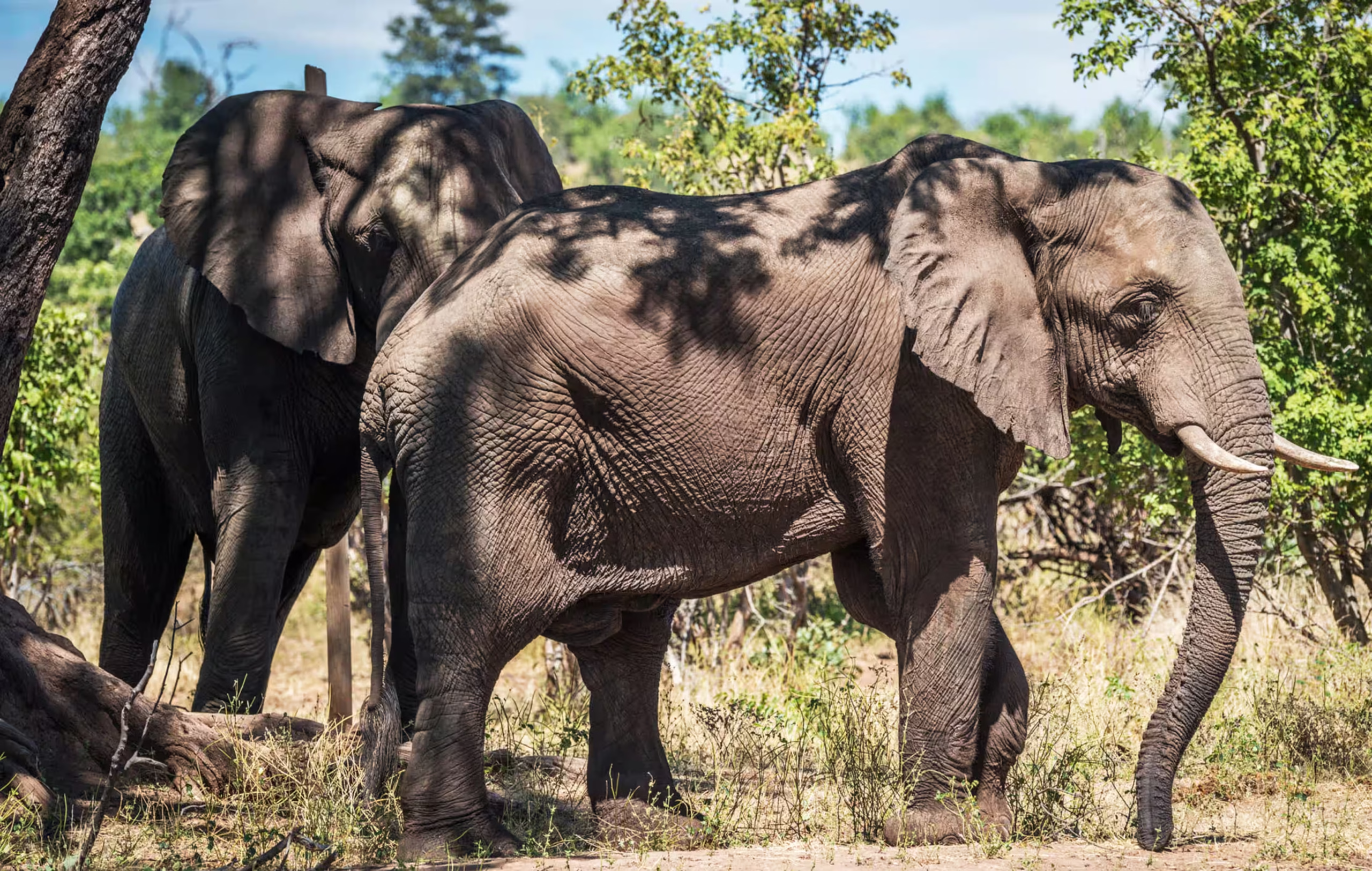
The fundamental unit of an East African safari. Open-roof Land Cruiser. A guide who has been reading this landscape for fifteen years. First light over the Serengeti plains. Every drive is different. Every drive is unrepeatable.
The morning drive departs before or at dawn. We are at the gate at first light, positioned at the relevant zone before most other vehicles have left camp. The first 90 minutes after sunrise — when predators are still active, the light is horizontal and gold, and the plains belong almost entirely to wildlife — produce the majority of what clients remember from any given day.
James Kimaro does not eat breakfast before a morning drive. Neither does the vehicle stop at a lodge restaurant on the way. The morning drive is the most important drive of any safari day and Tanzania Adventure treats it as such: full commitment from departure to return, no interruptions, no fixed time to return.
The light between 6am and 8am in the Serengeti is unlike any other light in the world. The low angle, the warmth, the way it catches the grass and the mane of a lion simultaneously — this is the window photographers build entire trips around. Tanzania Adventure is in it every single day.
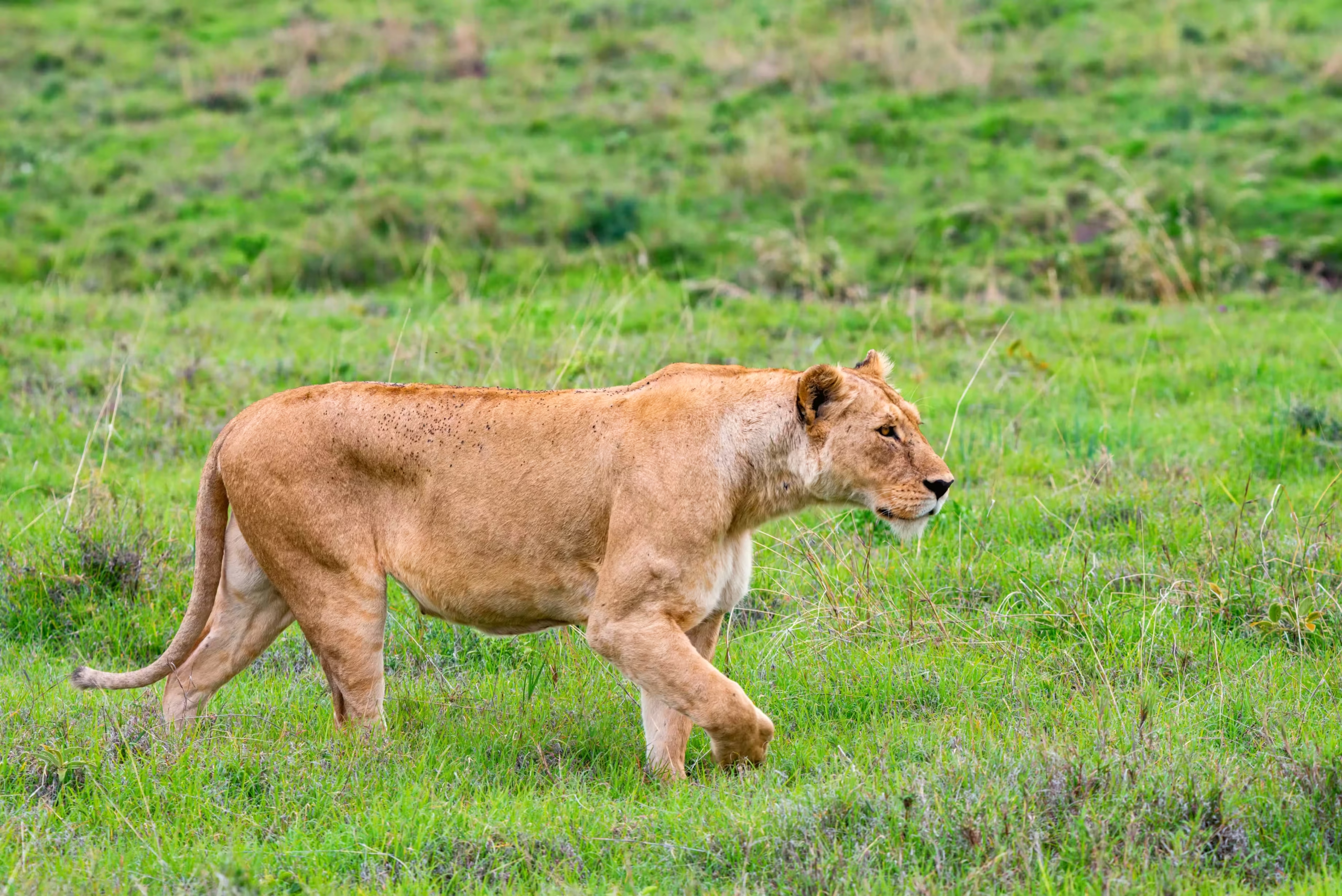
The evening drive runs from 4pm to 6:30pm — the second peak activity window, when predators that have rested through the midday heat begin to move. In the Serengeti, the afternoon drive regularly produces cheetah hunts on the short-grass plains, where the 4–6pm window is the most consistent cheetah activity period of the day.
The light at 5:30pm in the Serengeti in July turns the grass copper and the lion manes amber. If you have not photographed a lion in that light, you have not yet seen what an East African photograph looks like. Tanzania Adventure keeps the vehicle in the field until the last available light — 6:30pm before the park’s mandatory exit time — and does not retreat to camp early for drinks.
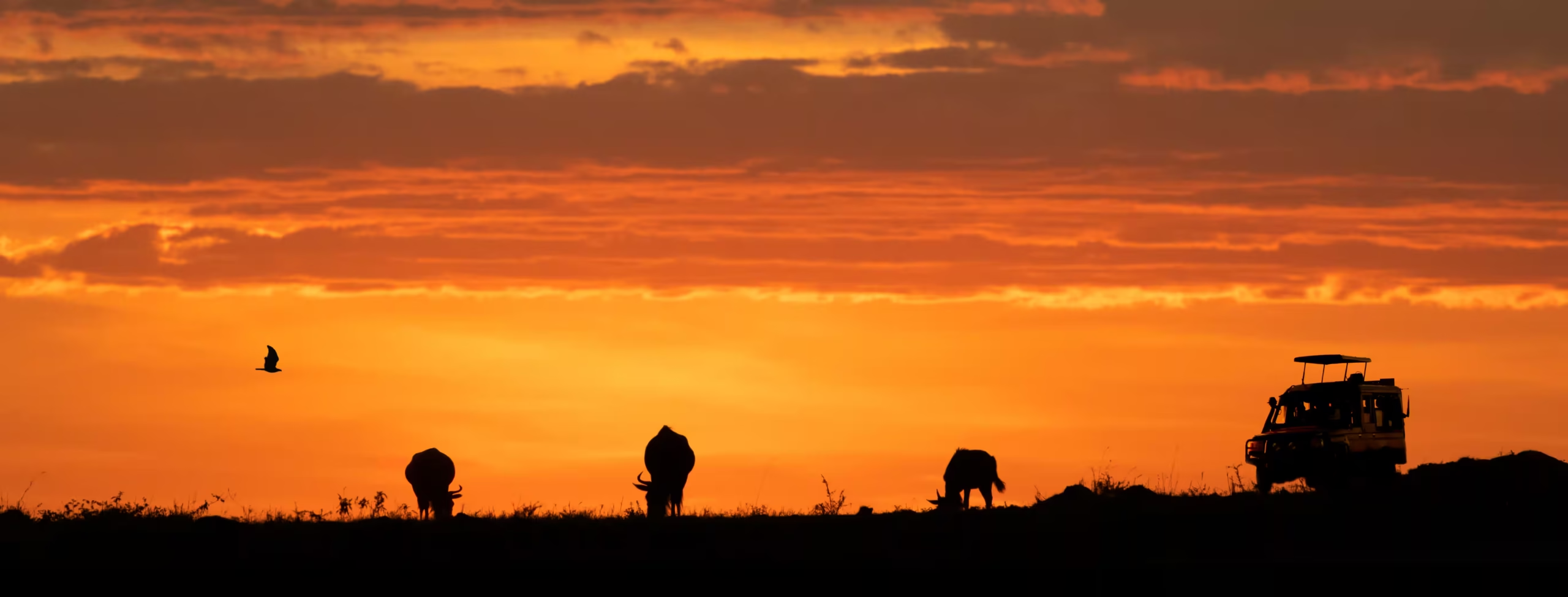
Evening drives combine naturally with a sundowner stop: vehicles pause at a position with a clear western horizon, the guide sets out drinks, and the sunset over the Serengeti plains or the Ngorongoro rim is witnessed without glass between you and it.
Full day drives are recommended for the Ngorongoro Crater — where a complete crater circuit requires a full day — and for the Serengeti during the peak Mara River crossing season, where leaving the river for a lodge lunch means missing a crossing that may not happen again for two days.
The bush lunch is one of Tanzania Adventure’s most consistently praised experiences: prepared by the camp kitchen, transported in cool boxes to a shade tree in the field, and laid out on a folding table with the same quality of food available at the lodge — without the lodge. Hippos at Ngoitoktok Spring audible from the lunch site. Lions resting 200 metres away.
A full day drive in the Serengeti during crossing season is the most intensive wildlife programme available in Tanzania. From 6am first light to 6pm mandatory exit — twelve hours of continuous engagement with the ecosystem at its most dramatic.
Night drives are available in Tarangire, Lake Manyara, and the southern parks. The nocturnal species portfolio is completely different from the daytime — bushbabies, civets, genets, porcupines, servals, aardvarks, and African wild cats. The Milky Way at full dark in the Serengeti is dense enough to cast faint shadows on the vehicle hood.
The vehicle moves slowly with a hand-held spotlight operated by the guide assistant. The beam sweeps the vegetation and the track margins. Eyeshine identifies species before the body is visible. A honey badger moving along the road edge. A serval frozen in mid-stalk. A barn owl watching from a baobab branch.
Tanzania Adventure night drives run from 7pm to 10pm from in-park camps only — the programme requires camp accommodation within the park boundary to avoid the gate curfew. Not all parks permit night drives; Tanzania Adventure advises on availability when designing each programme.
I have driven the Serengeti 3,400 times. I have never had two drives that were the same. Not once. That is why, twenty years later, I still go out at 5:30am excited.
Whether you are celebrating a honeymoon, discovering Africa for the first time, or returning for the experience you know only Tanzania delivers.
The game drive is the engine of every family safari. The vehicle, the guide, the shared moment of a lion at 20 metres — it is the experience children describe for the rest of their lives.
A private vehicle on a dawn drive, no other guests, and a guide who positions for the moment rather than the route. The game drive at its most intimate.
Vehicle positioning is everything in safari photography. Tanzania Adventure guides understand light angle, background management, and animal behaviour prediction — not just animal identification.
A private vehicle with Tanzania Adventure means one-to-one conversation with a guide whose knowledge is entirely available to you. The most educational safari format possible.
Tanzania Adventure positions guides by expertise, not rotation. The Serengeti drive with James is categorically different from a general guide operating the same route.
The Serengeti after dark is a completely different ecosystem. Leopards on the hunt. Honey badgers on the road. The Milky Way dense enough to cast shadow on the plain.
The difference between a mediocre game drive and a memorable one is almost never the wildlife present. It is the guide’s preparation, positioning, and interpretation. Tanzania Adventure guides do not use generic animal-tracking apps. They use relationships with resident camp staff, ranger networks, and years of personal observation to position the vehicle before wildlife has been located by other operators.
This is the distinction between being led to a sighting and being positioned to witness one naturally. At a natural sighting, animals behave normally. When six vehicles converge on a GPS coordinate, the animals often adjust — a lion moves off, a cheetah pauses a hunt. The outcome feels like a zoo exhibit rather than a wild encounter.
The most important skill a drive guide develops over years is reading what an animal is about to do based on current behaviour. A lioness adjusting her position into the wind with focused attention toward the floodplain is not resting — she is preparing a stalk. A guide who understands this positions the vehicle 80 metres ahead, downwind, and waits. The result is witnessing a hunt from preparation through to completion — a fundamentally different experience from arriving at a kill after the fact.
Tanzania Adventure operates an engine-off silence protocol at significant sightings. No engine noise. No radio. When the environment quiets, wildlife normalises completely within 5–10 minutes. The sounds of the ecosystem become audible: a lion’s breathing at 40 metres, wingbeats of descending vultures, the specific alarm call a zebra uses only when it has positively identified a predator rather than simply sensed one.
Every Tanzania Adventure game drive uses a dedicated open-roof Toyota Land Cruiser 4WD with a maximum of six guests. Not because regulations require it — because the economics of twelve-person vehicles pressure guides to move faster, spend less time at sightings, and prioritise throughput over depth. Six guests means the guide can have a genuine conversation with each person. It means the vehicle positions correctly without coordinating a group. It means the experience remains private.
Tanzania Adventure guides are trained in vehicle positioning for photography — the correct angle relative to the sun, the correct distance for natural behaviour, the approach speed that avoids flushing. For clients with camera equipment, the guide discusses specific requirements before departure and adapts positioning throughout the drive.
Key photography advice: bring a telephoto zoom (100–500mm or equivalent). The dawn light window runs from approximately 6:15am to 8:30am — the horizontal light that produces the images you have seen from the Serengeti. A tripod or beanbag for the vehicle window stabilises long lens shots at slow shutter speeds in low light. Tanzania Adventure can provide beanbags on request.
Serengeti: Best morning drives in Seronera Valley (resident prides year-round) and Ndutu (calving Jan–Mar). For Mara River crossings, northern Serengeti drives depart directly to crossing zones — James monitors water levels and herd pressure to predict crossing windows hours in advance.
Ngorongoro: Full-day drive recommended. Enter at 7am. Cover Lerai Forest before 10am. Flamingo lake 9–10am. Midday rim break. Late afternoon hippo pool before 6pm exit.
Tarangire: Dry-season drives along the river produce the highest elephant concentrations in the circuit. Position at Silale Swamp late afternoon for predator activity. Wild dog locations communicated by camp team if packs are in range.
Ruaha (Southern Circuit): Dawn drives along the Great Ruaha River produce extraordinary predator density from July through September. Multiple lion and wild dog sightings per drive are normal, not exceptional.
Warm layer for dawn drives (Serengeti in July can be 10–12°C at 5:30am). Sunscreen and hat for midday. Camera with telephoto lens. Binoculars (8×42 or 10×42). Dust cover for camera equipment. Tanzania Adventure provides a cooler with water and drinks in every vehicle throughout the day.
Tell us which park, which season, and what you most want to witness. We will design the drive programme — and assign the guide — around your specific priorities.