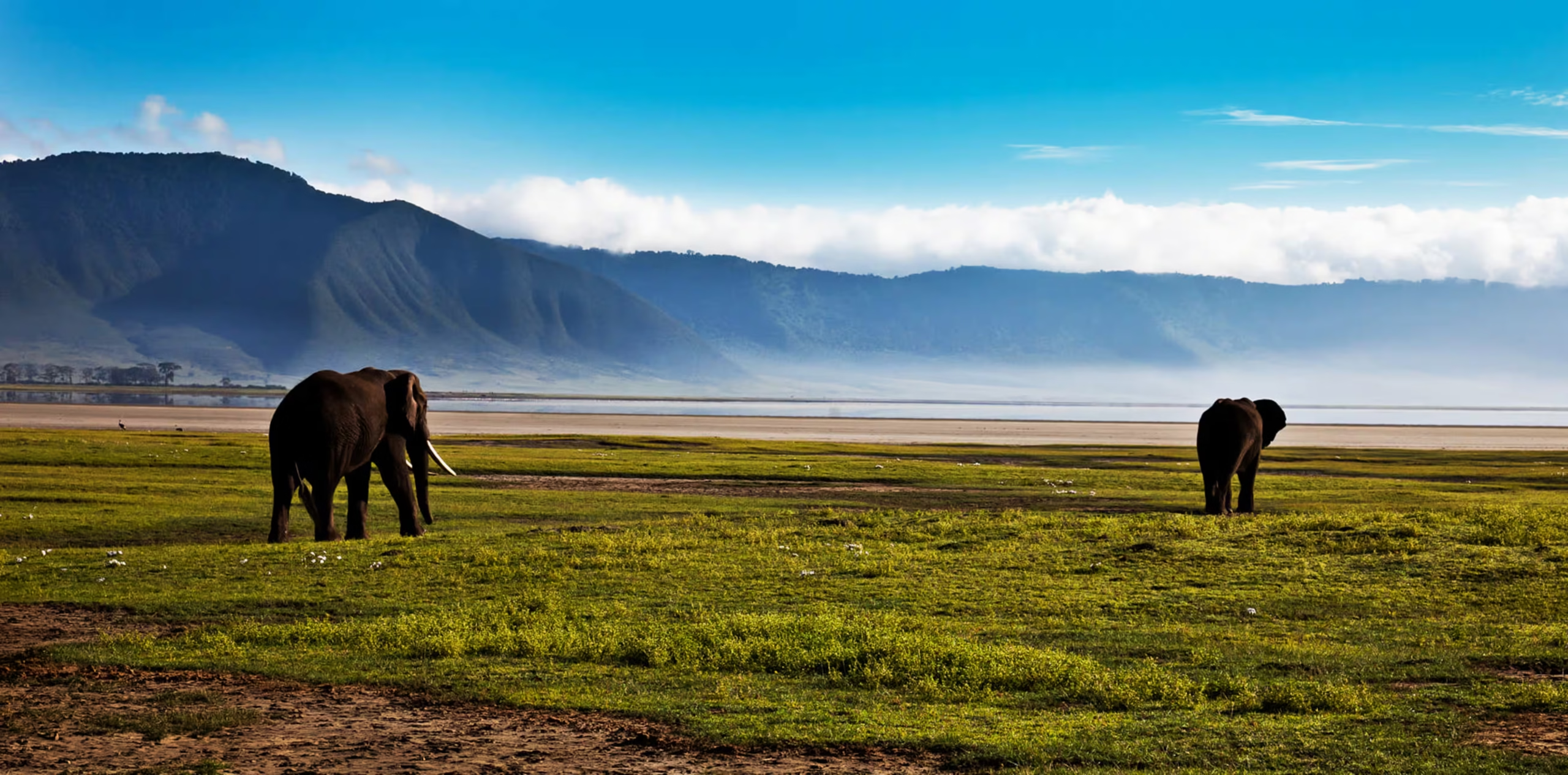

Ngorongoro Crater
The world’s largest intact volcanic caldera. 25,000 animals in a 259 km² bowl. The Big Five in a single day. One of Africa’s last self-sustaining black rhino populations. The Ngorongoro Crater delivers, consistently, when every other park in Africa varies.
Every sector reveals
something different

The Rhino &
Lerai Forest
The Lerai Forest in the southwestern crater is acacia and yellowwood woodland fed by groundwater springs. It is the most productive zone for the three most elusive crater species: black rhinoceros, leopard, and old bull elephants. Tanzania Adventure's crater specialist Moses Lema routes every morning to this sector before 9am.
The approximately 70 black rhino that live within the crater represent one of Africa's most significant surviving populations. The steep crater walls prevent poacher access — this population has never been successfully poached. Rhino are most active in early morning and late afternoon, moving between the Lerai Forest shade and the open grassland feeding areas.
Positioning at the Lerai edge in the first hour after descent gives the highest probability of rhino sighting. Moses maintains a weekly log of individual rhino territory and adjusts the route based on where specific animals were last observed. On a two-day programme, the probability of a rhino sighting with Tanzania Adventure exceeds 80%.

Ngoitoktok Spring &
The Hippo Pool
The Ngoitoktok Spring in the eastern crater is the most reliable water source on the crater floor. A permanent hippo pool holds 50 or more individuals visible from the bank at any time of day. Buffalo herds of several hundred graze the surrounding grassland, creating the conditions for predator observation that Ngorongoro does best.
The spring environment supports a complete food chain in miniature: the hippos maintain the pool structure, the buffalo attract lion and hyena attention, the fish in the spring draw fish eagles, and the wetland vegetation supports a concentration of waterbirds unavailable elsewhere on the crater floor.
Tanzania Adventure uses the Ngoitoktok area as a midday picnic location — lunch at the pool edge with hippos audible from 30 metres. This is one of the only places in the northern circuit where clients leave the vehicle for a picnic while surrounded by big game.

Crater Lions &
Spotted Hyena
The central crater grasslands support resident lion prides that are genetically distinct from Serengeti lions. The semi-enclosed nature of the crater gene pool has, over generations, produced noticeably darker-maned males. These prides have held the same territories for decades — Moses knows them individually and can name the dominant individuals in each coalition.
The Ngorongoro Crater has the highest spotted hyena density of any protected area in Africa. The crater supports clan territories that use the full floor. Dawn drives regularly reveal cooperative hyena hunts — a display of intelligence and coordination that rivals any lion sighting. Hyena here are unequivocally hunters, not scavengers: they initiate hunts independently and successfully far more often than they steal from others.
The central grasslands are most productive between 6:30 and 10am, when the overnight predator activity is still visible and the large herbivore herds — zebra, wildebeest, eland — are moving between water and grazing. The afternoon session from 4pm to 6pm catches the second predator activity peak before the 6pm mandatory crater exit.

Lake Magadi &
Flamingo Congregation
Lake Magadi at the northern crater floor is an alkaline soda lake that supports thousands of lesser and greater flamingos. At dawn, with mist lifting from the water and flamingos rising in formation against the 600-metre crater wall, this is one of the most photographed natural spectacles in East Africa.
The flamingo numbers vary seasonally — peak concentrations occur during the wet season when the algae growth in the alkaline water is most productive. Even during quieter periods, hundreds of birds are present, and the visual context of the lake against the crater walls creates a composition unavailable anywhere else in northern Tanzania.
Tanzania Adventure positions at the lake edge during the first 90 minutes after crater entry — the light is horizontal, the mist is still present, and the flamingo activity is at its peak before the midday heat disperses them to the deeper water. The lake also attracts saddle-billed stork, African spoonbill, and a full complement of wader species.
What the Crater
Reliably Delivers


Planning Your
Ngorongoro Safari
A Caldera That Became an Ecosystem
Approximately 2.5 million years ago, a massive volcano collapsed inward, creating a caldera 19 kilometres across and 600 metres deep. The walls are steep enough to contain most wildlife. The floor is large enough to support a complete, self-sustaining ecosystem. The combination of containment and completeness is what makes the Ngorongoro Crater unlike any other wildlife destination on Earth.
The crater was gazetted as part of the Ngorongoro Conservation Area in 1959 and designated a UNESCO World Heritage Site in 1979. The NCA is co-managed with Maasai communities who have grazing rights within the conservation area — one of the few protected areas in Tanzania where traditional pastoralism and wildlife conservation officially coexist. The crater floor itself is managed exclusively for wildlife.
How Many Nights?
One night on the rim gives you one full crater day. Two nights is strongly recommended — it gives you two full crater days with the flexibility to optimise timing based on guide intelligence from day one. Moses’s second-day positioning improves significantly because the first day’s observations refine the route. Rhino probability on day two is meaningfully higher than on day one.
The crater rim accommodation sits at 2,300 metres altitude — noticeably cooler than Arusha and frequently misty in the morning. Pack a warm layer regardless of season. The descent road takes 30 minutes; the ascent road is steeper and vehicles must exit before 6pm.
Vehicle and Guide Standard
The Ngorongoro Conservation Area limits vehicle numbers on the crater floor by permit. Tanzania Adventure secures permits for all crater days at booking. Every crater safari is guided by Moses Lema, our crater specialist, who has made over 1,100 crater descents and tracks the current rhino territory and lion pride composition by weekly observation. No other guide on the Tanzania Adventure team is assigned to Ngorongoro crater drives — the depth of knowledge required is specific and accumulated.
The Olduvai Gorge
The Olduvai Gorge is located within the NCA approximately 45 kilometres from the crater rim. Louis and Mary Leakey conducted excavations here from the 1950s, uncovering Homo habilis and Paranthropus boisei fossils that significantly revised the timeline of human evolution. A museum at the gorge is accessible as a half-day addition to any crater visit — Tanzania Adventure routinely includes it on the transfer day between Arusha and Ngorongoro.
The Daily Rhythm of the Crater
The crater has a precise daily pattern. Dawn (6:30–9am): predators still active from the night, lion prides transitioning from sleeping to feeding positions, hyena returning from nocturnal hunts. This is the most important window of the day. Mid-morning (9–11am): the flamingo lake at its most photogenic, hippo pool active, rhino moving to Lerai Forest shade. Midday (11am–3pm): most large mammal activity reduced — Tanzania Adventure uses this window for a rim break, debrief, and rest. Late afternoon (4–6pm): predators begin to move again, golden light on the 600-metre crater walls, buffalo herds moving to water.
Tanzania Adventure plans every crater day around this rhythm. The midday crater break — unique among our programmes — allows rim-top lunch and a guide debrief covering what was seen and the afternoon positioning strategy.
Is the Crater Crowded?
Vehicle numbers are limited by permit and can peak at midday in high season (July–September). Tanzania Adventure enters at the earliest permitted time (7am from the gate) and plans a rim break from approximately 11:30am to 3pm. This avoids the busiest midday period entirely and ensures the vehicle occupies the prime positions during the dawn and golden-hour windows when predator activity is highest and other vehicles are fewest.
What to Expect on a Full Crater Day
Departure from rim accommodation at 6:15am. Through the gate by 6:30am. Descent to crater floor by 7am. First sector: Lerai Forest for rhino and leopard positioning. Move to flamingo lake by 9am. Central plains for lion and hyena from 9:30–11am. Rim break 12–3pm. Second descent for late afternoon predator activity. Exit by 5:30pm. This structure ensures the vehicle is in the right zone at each key activity window — adjusted continuously by Moses based on fresh guide intelligence throughout the day.
Combining Ngorongoro
The Ngorongoro Crater is the anchor of every northern Tanzania circuit. Its proximity to the Serengeti (100km), Tarangire (150km from Arusha), and Lake Manyara (35km) makes it the natural hub of any multi-destination northern Tanzania safari. Tanzania Adventure’s most popular programme: three nights in the Serengeti followed by two nights on the Ngorongoro rim — covering both migratory and sedentary wildlife dynamics in five days. The full seven-night northern circuit adds Tarangire and Lake Manyara for complete ecosystem coverage.