Tanzania’s culinary landscape is as diverse as its breathtaking savannas and majestic mountains. The traditional Tanzanian food experience is a vibrant tapestry woven from regional specialties, cultural influences, and locally-sourced ingredients that tell the story of this East African nation. As we journey through Tanzania’s kitchens and street food stalls, we’ll discover how each dish carries centuries of history, reflecting the country’s tribal heritage and geographic bounty. From the smoky allure of nyama choma to the comforting simplicity of ugali, Tanzanian cuisine offers a window into the soul of a nation where food is more than sustenance—it’s a celebration of community, tradition, and the land’s generous offerings.
The Rich Tapestry of Traditional Tanzanian Food
A traditional Tanzanian meal featuring ugali, maharage (beans), and sukuma wiki (greens)
Tanzanian cuisine is incredibly diverse, with ingredients and preparation methods varying significantly from region to region. What makes traditional Tanzanian food special is its extensive use of aromatic spices, including cloves, cinnamon, cardamom, and coconut milk, which infuse dishes with rich, complex flavors that linger on the palate.
The foundation of most Tanzanian meals consists of a starch accompanied by a protein or vegetable dish. Rice and ugali (a firm maize porridge) form the backbone of many meals, while beans, spinach, okra, and cassava leaves are commonly used vegetables that add nutrition and flavor to everyday dishes.
One fascinating aspect of Tanzanian culinary culture is its abundance of plantain varieties, with at least 17 distinct types found throughout the country. These versatile fruits are often fried into crispy chips or incorporated into stews and soups, adding both texture and substance to traditional dishes.
Cultural Influences on Tanzanian Cuisine
Tanzania’s strategic position along ancient trade routes has enriched its culinary traditions with influences from India, the Middle East, and Portugal. The Indian influence is particularly evident in coastal regions and urban centers like Dar es Salaam, where you’ll find numerous Indian-owned restaurants serving beloved staples such as chapati (flatbread) and samosas.
The coastal regions, particularly Zanzibar, showcase a distinctive blend of African, Arab, and Indian flavors, resulting in a unique culinary style often referred to as Swahili cuisine. Here, seafood dishes seasoned with coconut, cardamom, and cloves create an unforgettable dining experience that reflects centuries of cultural exchange.
In the northern regions near Mount Kilimanjaro, the Chagga people have developed distinctive cooking traditions centered around bananas, which they cultivate on the fertile mountain slopes. Meanwhile, in the central plains, the Maasai’s traditional diet revolves around cattle products, including meat, milk, and occasionally blood—though this practice is becoming less common.
Traditional Cooking Methods
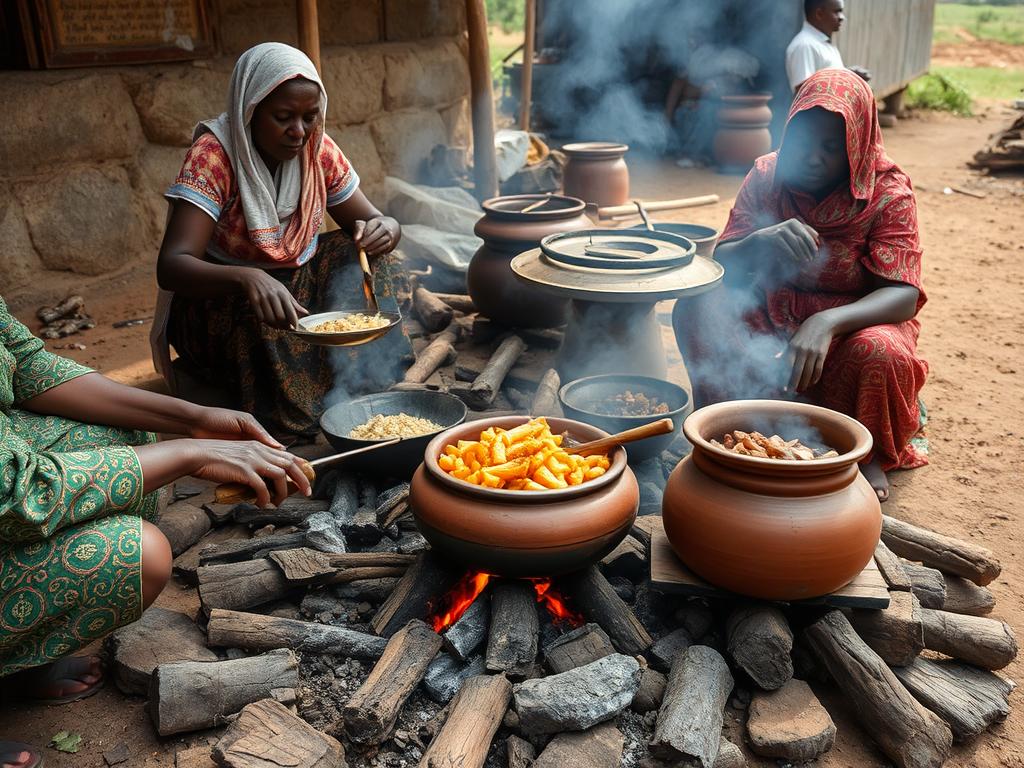
Traditional cooking methods using charcoal fire and clay pots
Preparing traditional Tanzanian food is a labor of love that demands patience and time. Unlike quick-fix meals, Tanzanian dishes require a lengthier preparation process, primarily because they’re often cooked in larger portions to accommodate communal dining experiences.
Cooking over wood or charcoal fires adds to the time-intensive nature of Tanzanian cuisine. This traditional method imparts a unique smoky flavor but also requires a slower cooking pace. It’s not uncommon for a typical Tanzanian meal to take several hours to prepare, as dishes simmer and flavors meld together over the flickering flames.
In Tanzanian kitchens, where ovens are a rarity, cooking techniques rely heavily on boiling, grilling, and frying using vegetable oil. These methods, though familiar, are executed over open fires, adding an authentic touch to every dish and showcasing the resourcefulness of Tanzanian cooks in adapting to their culinary environment.
The use of charcoal fire holds a pivotal role in Tanzanian cooking, contributing not only to the preservation of original flavors but also to the retention of food’s texture and nutritional value. This traditional cooking method imbues dishes with a distinct smokiness while ensuring that meats and vegetables are cooked to tender perfection.
Essential Staple Dishes in Traditional Tanzanian Food
Ugali: Tanzania’s National Dish
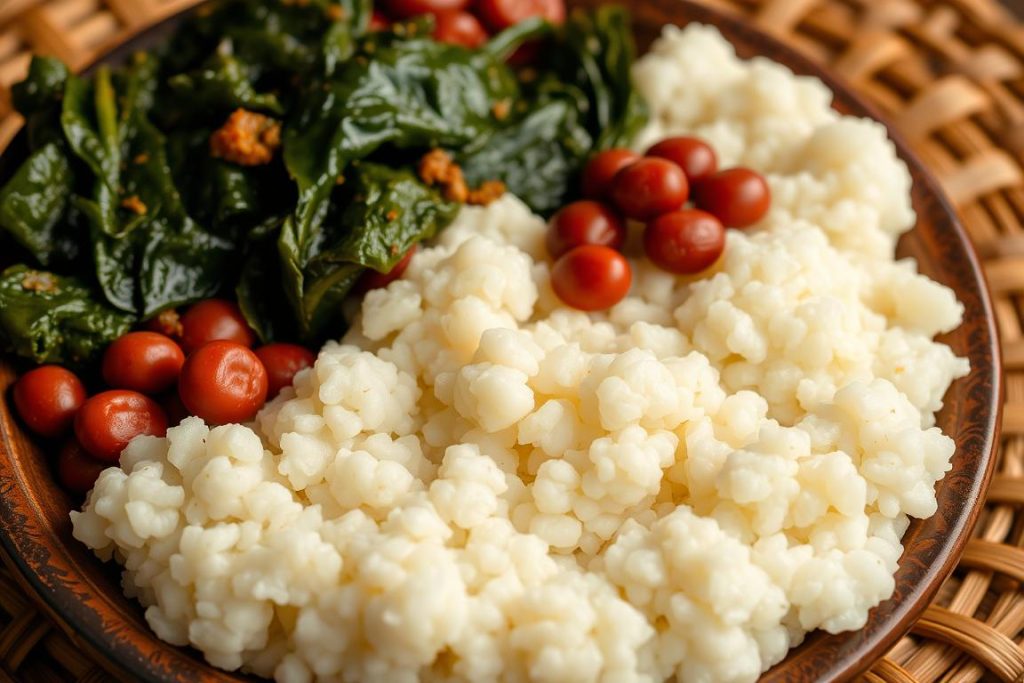
Ugali served with sukuma wiki (collard greens) and beans
Ugali reigns supreme as the undisputed king of Tanzanian cuisine, holding the esteemed title of the country’s national meal. It’s not just a dish; it’s a culinary cornerstone deeply ingrained in the daily lives of Tanzanians, who indulge in it approximately four times a week on average.
Step into any neighborhood restaurant, and you’re bound to find ugali proudly listed on the menu, offered at a reasonable price that makes it accessible to all. This beloved staple isn’t just a solo act; it’s often accompanied by an array of flavorful side dishes. Whether paired with vegetables, soup, dagaa (small fish), beans, or various forms of fish, ugali forms the heart of many Tanzanian meals.
For those whose livelihoods demand physical endurance, such as fishermen, construction workers, factory laborers, or farmers, ugali is more than just a meal—it’s a source of sustenance and energy. Recognized for its high-energy properties, this hearty dish fuels hardworking individuals through long days of toil, earning its reputation as a vital component of Tanzanian cuisine and culture.
Crafted from a simple yet ingenious combination of hot water and flour, ugali boasts a firm consistency that pairs perfectly with a variety of flavorful accompaniments. While maize flour remains the most prevalent choice, other grains like millet, cassava, and sorghum also lend their unique characteristics to this quintessential Tanzanian dish.
Wali na Maharage (Rice and Beans)
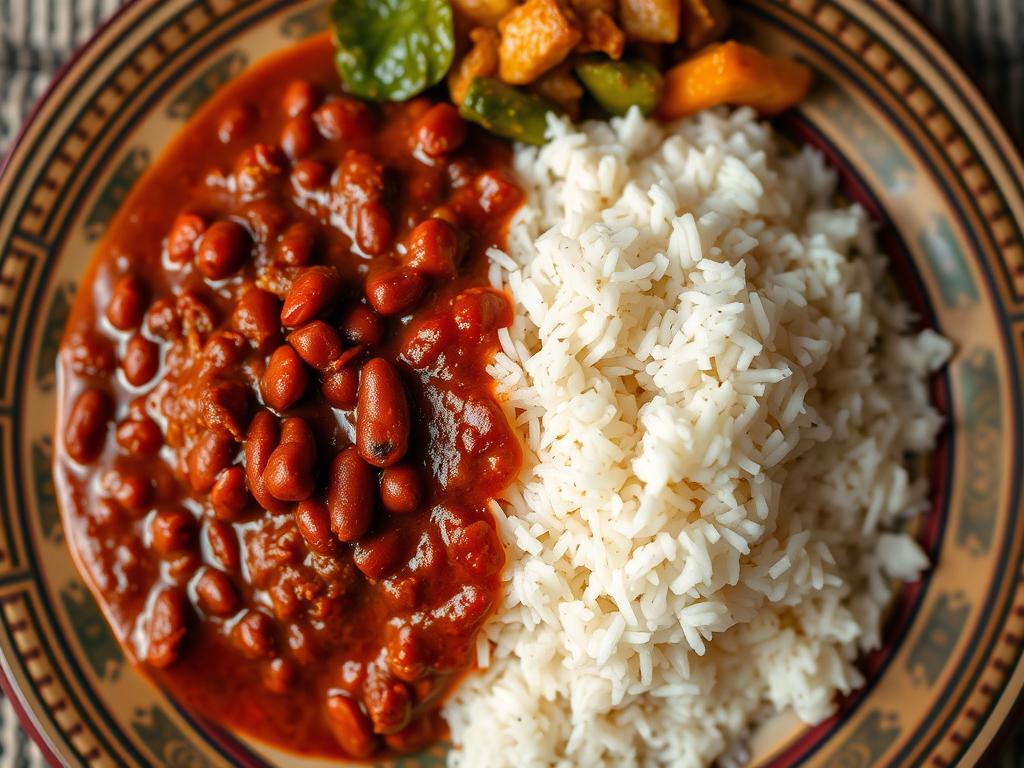
Wali na Maharage with vegetables, a beloved everyday dish
Wali Maharage, a rice and bean dish, holds a cherished place on Tanzanian dinner tables and is often the star of social gatherings, from religious festivals and weddings to somber occasions like funerals, as well as festive holiday celebrations.
Crafted with care and infused with love, Wali Maharage is a true culinary delight, prepared with meticulous attention to detail to ensure its irresistible flavor and satisfying texture. Traditionally, the beans and rice are cooked separately before being united to create this flavorful dish.
To prepare the beans, cooks use carrots, onions, tomatoes, oil, green peppers, and an assortment of seasonings, resulting in a rich and aromatic bean mixture. Once ready, the beans are served in a bowl, while the rice is delicately plated—often enjoyed using the hands for an authentic dining experience.
When served in restaurants, Wali Maharage is accompanied by two delectable side dishes: a vibrant green vegetable such as matembele (sweet potato leaves) or mchicha (amaranth leaves), offering a refreshing contrast to the hearty main dish, and sometimes a special sauce known as mchuzi ya nyama, infused with a hint of meaty goodness to elevate every bite.
Pilau: Spiced Rice Delight

Aromatic Tanzanian pilau rice with meat and spices
Tanzanian pilau dishes are a true symphony of spices, with black peppercorns, cloves, cumin, cardamom, and cinnamon taking center stage to create the signature pilau masala blend. Renowned for its rich flavor profile and aroma, pilau holds a cherished place in Tanzanian cuisine.
In Tanzania, the art of spicing extends beyond mere seasoning—it’s a culinary heritage deeply ingrained in every national occasion. From festive gatherings to everyday meals, pilau takes pride of place on the dining table, earning its status as a culinary icon alongside the revered ugali.
Versatility is another hallmark of Tanzanian pilau, offering a delightful array of options to suit every palate. Whether enjoyed as a simple vegetable dish or paired with succulent chicken, beef, or lamb, pilau embodies the essence of a one-pot wonder—a hearty and flavorful meal that satisfies both the appetite and the soul.
Nyama Choma: Tanzania’s Beloved Grilled Meat
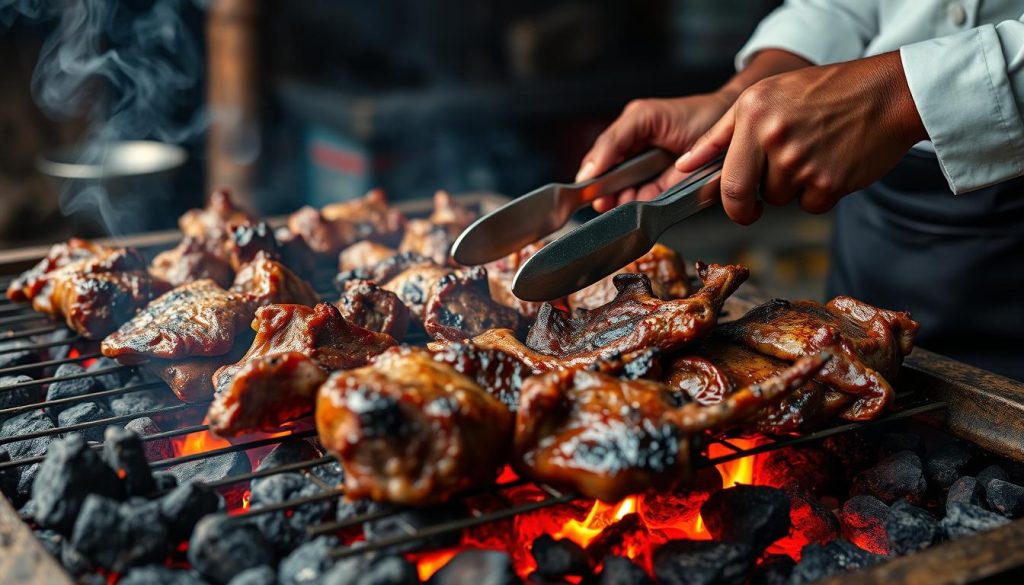
A chef preparing nyama choma over traditional hot coals
Nyama choma, which literally translates to “grilled meat” in Swahili, is more than just a dish in Tanzania—it’s a cultural institution and social experience. This beloved delicacy consists of meat (typically goat, beef, or chicken) seasoned simply with salt and sometimes a hint of spices, then slow-roasted over open coals until perfectly tender and infused with smoky flavor.
The preparation of nyama choma is an art form that requires patience and skill. The meat is usually cut into sizeable chunks and placed on skewers or grills positioned over hot coals. The slow cooking process allows the fat to render gradually, basting the meat naturally and creating a juicy interior with a slightly crisp exterior. The simplicity of the seasoning allows the natural flavor of the meat to shine through, enhanced by the smoky essence of the charcoal.
What makes nyama choma special is not just its taste but the entire experience surrounding it. In Tanzania, eating nyama choma is typically a communal affair, bringing together family and friends for hours of conversation and connection. The meat is often served on a large platter, accompanied by kachumbari (a fresh tomato and onion salad), sliced avocados, and a side of ugali or chips (french fries).
Mr. Gibson Meiseyeki’s Passion for Nyama Choma

Mr. Gibson Meiseyeki sharing his love for nyama choma with tour guests
For Mr. Gibson Meiseyeki, the owner of Tanzania 2000 Adventure, nyama choma is the heart of Tanzanian hospitality. “When I take visitors on safari, I always ensure they enjoy good nyama choma,” Gibson says with a warm smile. “It’s not just about the food. It’s about sharing our culture and way of life. It’s also about making memories around the fire.”
Gibson’s love affair with nyama choma began in his childhood, where family gatherings in his village near Arusha always featured this special dish. “My father was known for selecting the best cuts of goat meat, and my mother had a special way of preparing it that made everyone in the village want to join our celebrations,” he recalls fondly.
Today, Gibson has incorporated authentic food experiences into his adventure tours, creating special nyama choma evenings under the stars for his guests. “There’s something magical about enjoying freshly grilled meat while listening to the sounds of the Serengeti at night,” he says. “I’ve seen even the most hesitant travelers fall in love with our traditional food when they experience it in this way.”
What makes Gibson’s nyama choma special is his insistence on traditional preparation methods. “We don’t rush the process,” he explains. “The meat must be cooked slowly, allowing the flavors to develop naturally. And we always serve it with fresh kachumbari and ugali made from local maize—the complete Tanzanian experience.”
Experience Authentic Nyama Choma with Tanzania 2000 Adventure
Join Mr. Gibson Meiseyeki for an unforgettable culinary journey through Tanzania. Our tours include special nyama choma evenings under the stars, where you’ll learn about traditional preparation methods and enjoy this delicious dish in its authentic setting.
Coastal Delights: Tanzanian Seafood Specialties
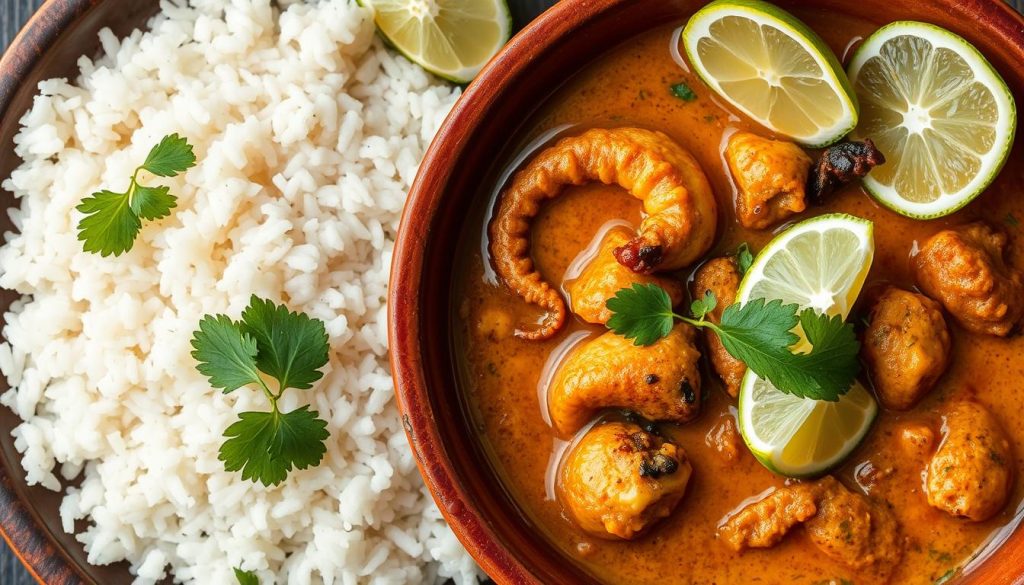
Pweza wa nazi (octopus coconut curry), a coastal Tanzanian delicacy
Pweza wa Nazi (Octopus Coconut Curry)
Octopus holds a special place in Tanzanian seafood cuisine, offering a delectable canvas for culinary creativity. Among the many enticing preparations, one standout favorite is the sumptuous coconut curry known as “pweza wa nazi,” a beloved traditional dish hailing from Zanzibar.
This tantalizing creation isn’t just delicious; it’s also deeply satisfying, showcasing the rich flavors of Tanzania’s coastal bounty. While octopus takes the spotlight in this dish, it’s worth noting that you can easily substitute it with any other locally sourced fish or seafood for a similarly delightful experience.
Tenderizing octopus requires a bit of finesse. Traditionally, fishermen would gently beat the octopus on the beach after catching it, a method that helps to tenderize the meat. However, for optimal tenderness, culinary experts choose to pre-boil it before incorporating it into the curry. This step ensures that the octopus absorbs the rich flavors of the coconut curry as it simmers to perfection.
Mchuzi wa Samaki (Fish Stew)
Tanzanian cuisine boasts a standout dish that captures the essence of coastal flavors: mchuzi wa samaki, a delectable fish stew renowned for its versatility and rich taste. While the specific fish used may vary depending on the region, the dish consistently delivers a satisfying culinary experience.
In northern Tanzania, “kambale fish” takes center stage, infusing the stew with its unique flavor profile. Meanwhile, in the central region, “migebuka fish” lends its distinctive taste to the dish, showcasing the diverse array of fish varieties found across the country. And in Lake Zone locations, you’ll find dishes favoring tilapia or Nile perch.
Beyond the fish, mchuzi wa samaki features a blend of tomatoes, coconut, green peppers, carrots, and onions. To enhance the dish further, Tanzanian chefs may infuse it with the zesty tang of lemon juice and the aromatic warmth of curry powder, creating a harmonious balance of flavors that perfectly complements the tender fish.
Tanzanian Street Food: Flavors on the Go
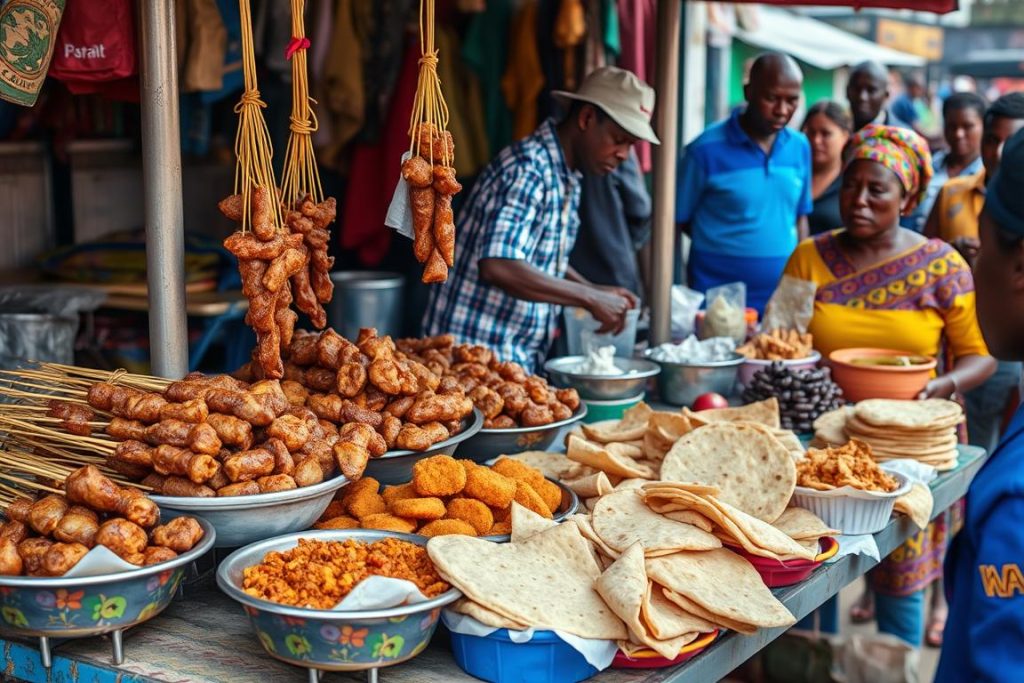
Colorful array of Tanzanian street food offerings
Mishkaki (Tanzanian Kebabs)
Mishkaki, a beloved Tanzanian delicacy, tantalizes taste buds with its succulent beef marinated in a flavorful blend of ginger, lemon, and chili peppers, before being expertly skewered and grilled over charcoal. This mouthwatering dish isn’t just a meal—it’s a cultural experience enjoyed by Tanzanians of all ages, particularly as a popular snack option.
Often paired with roasted potatoes to create the irresistible “chips mishkaki,” it’s also commonly served alongside fried cassava and the delectable sweetness of roasted or smoked plantains. Come evening, the streets of Tanzania come alive with the aroma of sizzling mishkaki, as street food vendors set up grills to cater to hungry passersby.
Mishkaki isn’t just confined to street-side enjoyment; it’s a versatile dish that finds its way into stores, bars, and music venues across the country. Paired with refreshing beverages like beer or wine, mishkaki transforms any gathering into a celebration of Tanzanian flavors and traditions.
Zanzibar Pizza
Despite its name, Zanzibar pizza bears little resemblance to the Italian favorite. This unique street food consists of a thin dough filled with a mixture of minced meat, onions, peppers, and sometimes an egg, then folded into a square packet and fried until crispy. Vegetarian versions featuring cheese, vegetables, or even banana and chocolate are also popular, especially among tourists.
Found primarily at the night markets in Stone Town, Zanzibar, this delicious snack showcases the fusion of influences that characterize Swahili cuisine. The dough is stretched paper-thin, filled with the chosen ingredients, then expertly folded and fried on a hot griddle, resulting in a crispy exterior and flavorful, melted interior.
Mandazi and Vitumbua
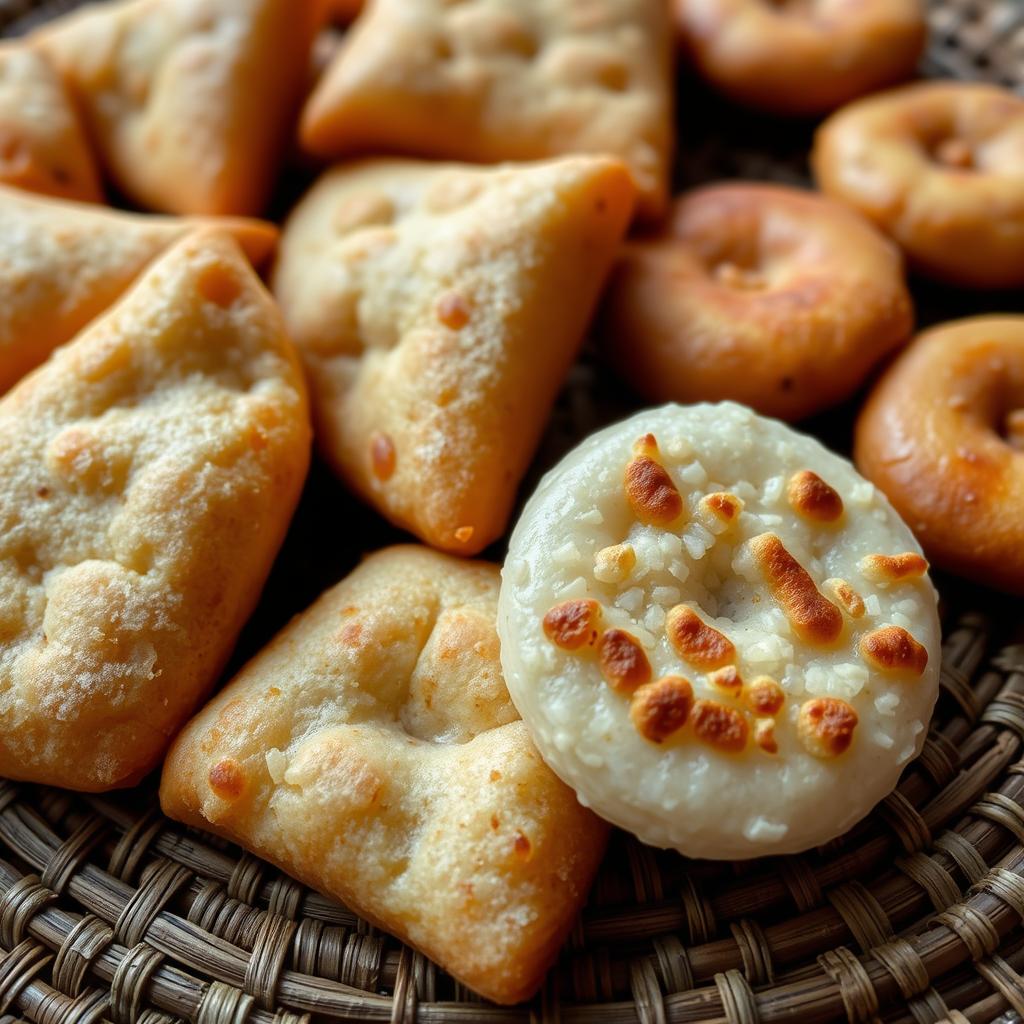
Freshly made mandazi (left) and vitumbua (right), popular Tanzanian snacks
Tanzanians love munching on mandazi as a snack. While versatile enough to enjoy at any hour, many opt to kickstart their mornings with mandazi, pairing it with comforting oatmeal or a steaming cup of tea for a satisfying breakfast. Crafting mandazi begins with a simple yet delightful dough made from a blend of eggs, sugar, wheat flour, bicarbonate of soda, and fresh milk.
After a brief resting period, the dough is shaped into various forms, from triangles to rectangles or even spheres, before taking a dip in hot oil for a deep-fry session until achieving a crispy, golden brown perfection. As the day transitions into evening, mandazi remains a beloved snack choice in Tanzania’s coastal regions like Dar es Salaam, Tanga, and Pwani.
Vitumbua, on the other hand, are delicious rice pancakes made from rice flour, coconut milk, and sometimes cardamom for flavor. These round, slightly sweet treats are cooked in special pans with half-sphere indentations, resulting in perfectly round, golden-brown pancakes with a slightly crisp exterior and soft, spongy interior. They’re particularly popular in Zanzibar and coastal regions, often enjoyed as a mid-morning or afternoon snack with tea.
Vegetarian Delights in Traditional Tanzanian Food

A colorful spread of vegetarian Tanzanian dishes
Sukuma Wiki (Collard Greens)
One dish that’s often paired with ugali is sukuma wiki. It refers to a popular East African dish made with sukuma, which is Swahili for colewort or collared greens, a type of leafy vegetable similar to kale. Other than colewort, ingredients used to make sukuma wiki include tomatoes, onions, and various spices like cumin, coriander, and turmeric.
Like ugali, it’s an affordable dish that’s consumed throughout the year. In fact, the name sukuma wiki literally translates to “push the week” or “stretch the week” in reference to its affordability and availability, making it a practical solution for families looking to make their food budget last until the next payday.
Mchuzi wa Biringani (Eggplant Curry)
Mchuzi wa biringani is among the quickest and simplest Tanzanian dishes you can prepare if you don’t have much time. At its core, this dish revolves around thinly sliced eggplant, sautéed to perfection in oil until tender.
But the magic doesn’t stop there. Complementing the eggplant are a medley of onions, ginger, tomatoes, garlic, and carrots, adding layers of flavor and texture to the dish. To further enrich the sauce and enhance the dish’s consistency, chefs sometimes incorporate potatoes, lending their starchiness to thicken the mixture.
This versatile dish can be served either as a hearty soup or as a flavorful eggplant curry, depending on personal preference. For those seeking an extra dimension of taste, the addition of coconut milk elevates the flavors of the vegetables to new heights, creating a luscious and satisfying culinary experience.
Ndizi (Plantains)
Ndizi literally means “banana” in Swahili, but in culinary contexts, it typically refers to plantains, which are a traditional Tanzanian food preferred mostly by the Chagga tribe in the northern part of the country. It’s also popular among the Wasukuma, Wahaya, and Wakurya tribes of the Lake Zone regions.
The reason for its popularity in those aforementioned regions is its availability – those are the best growing regions for plantains in Tanzania. Ndizi is available in other parts of the country as well, but usually at a steeper price due to transportation costs.
Ndizi is a versatile ingredient that can be used to make many Tanzanian dishes. One of the most delicious is ndizi kaanga (fried plantains), where ripe plantains are sliced and fried until golden brown, creating a sweet and savory side dish. Another popular preparation is supu ya ndizi, a Tanzanian soup made with mashed green plantains and often enhanced with meat or vegetable stock for added flavor.
Zanzibar: The Spice Island’s Unique Flavors
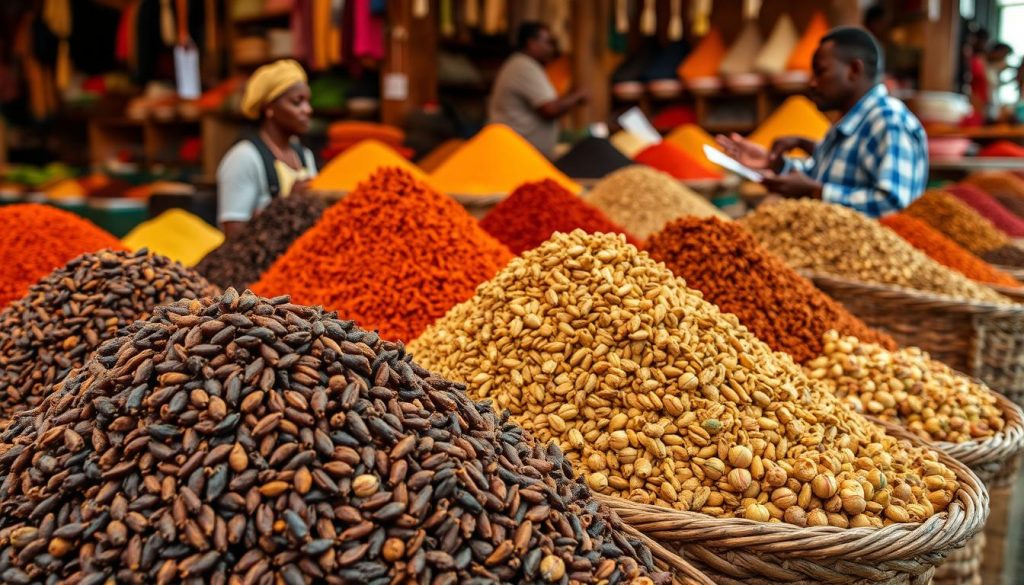
Vibrant spice market in Zanzibar showcasing the island’s famous spices
Food in Zanzibar stands apart from mainland Tanzanian cuisine, with many Tanzanians believing the food in Zanzibar to be among the best in the country. The island’s strategic location made it a hub for the spice trade, earning it the nickname “Spice Island” and infusing its cuisine with an array of aromatic ingredients that create unforgettable flavor profiles.
Zanzibar’s culinary landscape is heavily influenced by its history as a trading post, where Arab, Indian, Portuguese, and indigenous African traditions merged to create a distinctive Swahili cuisine. The liberal use of spices like cloves, cinnamon, black pepper, and cardamom—many of which are grown on the island—is a hallmark of Zanzibari cooking.
Urojo (Zanzibar Mix)
Urojo, a beloved culinary gem originating from Zanzibar, holds a cherished place in the hearts and homes of locals, where it’s a frequent fixture on weekly menus. What makes urojo truly special is its adaptability, with each household infusing their own unique flair into this iconic dish.
A veritable cornucopia of flavors and textures, urojo is a hearty soup brimming with a diverse array of ingredients. From tender potatoes to flavorful mishkaki, boiled eggs to crispy kachori, and a medley of vegetables to crunchy fried cassava pieces, every spoonful offers a delightful surprise for the palate.
The base of urojo is a slightly sour, spicy soup made from mango and tamarind, giving it a distinctive tangy flavor that cuts through the richness of the other ingredients. Available for purchase from street vendors in the evenings, urojo is not just a meal; it’s a culinary experience that captures the essence of Zanzibar’s vibrant food culture.
Spice-Infused Seafood
Given Zanzibar’s island location, seafood naturally plays a starring role in its cuisine. Red Snapper holds a distinguished place in Zanzibari cooking, prized for its delicate flavor and tender texture. This exquisite fish is often prepared with simplicity in mind, marinated lightly with local spices and then expertly grilled to perfection.
Another seafood delicacy from the region is samaki wa kupaka, which features fish cooked in a rich coconut sauce infused with garlic, ginger, and a blend of spices. The dish exemplifies the harmonious marriage of fresh seafood with the aromatic spices that have made Zanzibar famous throughout the culinary world.
Discover the Flavors of Zanzibar with Tanzania 2000 Adventure
Our specialized Zanzibar culinary tours take you through the island’s spice farms, local markets, and best restaurants. Learn about the history of the spice trade while sampling authentic dishes prepared with freshly harvested ingredients.
Tanzanian Dining Customs and Etiquette

A Tanzanian family sharing a traditional communal meal
In Tanzania, meals are enjoyed in a communal setting, often seated at a low table or gathered on a floor mat. Before diving into the feast, a cherished tradition involves washing one’s hands with warm water at the table, symbolizing a cleansing ritual before partaking in the meal.
An important aspect of Tanzanian dining etiquette is the use of the right hand only, regardless of handedness, as it is considered the “pure hand,” while the left hand is deemed “dirty.” When the spread is laid out, it’s typically presented on a large platter, with everyone gathering around to help themselves. The centerpiece of many meals is a mound of rice, sculpted into a hill shape, among an array of delicious dishes.
Even with multiple diners, salad is typically served on a single plate, facilitating easy sharing and fostering a sense of togetherness. Tanzanian tableware is simple and functional, with medium-sized plates and minimal utensils, allowing the focus to remain on the flavors and enjoyment of the meal.
The Rhythm of Tanzanian Meals
For breakfast in Tanzania, a delightful array of options awaits, ranging from savory to sweet delights. Among the favorites are flatbread or chapati, providing a hearty start to the day with their satisfying texture and flavor. For those with a sweet tooth, mandazi offers a delectable treat that pairs perfectly with a cup of tea or coffee.
In Tanzania, the largest meal of the day is lunch, typically occurring around 1:00 PM. At the heart of the lunchtime spread are staple foods like ugali or rice, providing a satisfying base for the meal. Alongside these grains, beans take a prominent place, offering protein and depth of flavor to the dish. Vegetables play a vital role in adding freshness and nutrition, with mchicha, a type of spinach, often making an appearance.
As the day winds down, Tanzanian dinners offer a familiar and comforting continuation of the culinary journey. Similar to lunch, supper typically revolves around staple dishes like ugali or rice, accompanied by beans, vegetables, and chapati bread. While dinner shares many similarities with lunch, there’s often the occasional addition of a meat piece, adding an extra layer of indulgence and protein to the meal.
In Tanzanian dining tradition, dessert is not a common occurrence after dinner. Instead, the meal is rounded off with the refreshing sweetness of fruit, served alongside the main course to provide a satisfying and wholesome conclusion to the day’s culinary offerings.
Traditional Tanzanian Drinks and Beverages

Traditional Tanzanian chai (spiced tea) served with mandazi
In Tanzania, chai (tea) reigns supreme as the undisputed champion of beverages, cherished for its simplicity and comforting warmth. Easy to make and enjoyed throughout the day, chai holds a special place in Tanzanian culture, serving as a beloved companion to meals and social gatherings alike. Tanzanian chai is typically prepared with milk, sugar, and a blend of spices that may include cardamom, cinnamon, ginger, and cloves.
Beyond its role in traditional beverages, plantains play a significant role in Tanzania’s alcoholic drinks as well. Among the nation’s prized libations is mbege, a national beverage hailing from the Kilimanjaro area. Crafted from fermented bananas, mbege offers a unique and refreshing taste that captures the essence of Tanzania’s rich culinary heritage.
Another popular beverage, particularly in coastal regions and Zanzibar, is fresh sugar cane juice, often flavored with ginger and lime. This sweet, refreshing drink is prepared by pressing sugar cane through mechanical rollers to extract the juice, which is then served over ice for a cooling treat in Tanzania’s warm climate.
For those seeking something stronger, Konyagi is Tanzania’s national spirit. Often compared to gin but with a distinctive flavor profile, Konyagi is typically enjoyed neat or mixed with soda water and lime. It’s a fixture at social gatherings and celebrations throughout the country.
Unforgettable Tanzanian Food Experiences
Food Markets and Street Food Tours
Joining a culinary tour might be the perfect way to discover the rich tapestry of traditional Tanzanian food if you’re traveling to Tanzania. With a native guide leading the way, you’ll have the opportunity to delve deeper into the flavors, traditions, and stories behind each dish, ensuring a truly authentic culinary experience.
Guided tours offer a unique blend of expertise and exploration, whisking you away to the city’s hidden culinary gems, bustling marketplaces, and vibrant street food stands that you might otherwise overlook. From savoring succulent grilled meats to indulging in fragrant stews and sampling exotic fruits, each stop on the tour promises a tantalizing journey through Tanzania’s diverse culinary landscape.

A bustling food market in Tanzania showcasing local ingredients
Mr. Gibson’s Special Food Experiences

Tanzania 2000 Adventure guests enjoying a cultural food experience
“Food is the gateway to understanding a culture,” says Mr. Gibson Meiseyeki of Tanzania 2000 Adventure. “That’s why I’ve designed our tours to include authentic food experiences that connect our guests with local communities and traditions.” Gibson’s passion for sharing traditional Tanzanian food with visitors has led him to develop several unique culinary experiences that have become highlights of his tours.
One of the most popular is the “Bush Dinner” experience, where guests enjoy a traditional meal under the stars in the Serengeti. “We prepare everything the traditional way,” Gibson explains. “The meat is grilled over acacia wood coals, which gives it a special flavor you can’t replicate in a kitchen. We serve it with fresh ugali, local vegetables, and tropical fruits, all while listening to the sounds of wildlife in the distance.”
Another unique offering is the “Village Cooking Class,” where travelers visit a local community and learn to prepare traditional dishes alongside Tanzanian women. “Our guests love getting their hands dirty making ugali or learning how to properly grill nyama choma,” Gibson says with pride. “They leave with recipes and skills they can take home, but more importantly, they gain a deeper appreciation for our culture.”
For those interested in the spices that make Tanzanian cuisine special, Gibson arranges tours of spice farms in Zanzibar, where visitors can see, smell, and taste the fresh ingredients that define the island’s distinctive flavors. “The look on people’s faces when they taste fresh cardamom or cinnamon straight from the tree is priceless,” he says. “It completely changes how they experience our food afterward.”
Join a Tanzania 2000 Adventure Culinary Experience
From bush dinners under the stars to cooking classes in local villages, our tours offer authentic food experiences that go beyond typical tourism. Learn about traditional Tanzanian food directly from local communities while creating unforgettable memories.
Embracing the Spirit of Traditional Tanzanian Food
Tanzanian cuisine is a reflection of the country’s rich cultural diversity, with each region offering its own unique culinary traditions and flavors. With over 125 tribes contributing to the tapestry of traditional Tanzanian food, it’s no surprise that the dishes vary significantly from one region to another.
Despite this diversity, certain dishes have emerged as universal favorites, enjoyed by Tanzanians from all walks of life. From the comforting staple of ugali to the aromatic flavors of pilau, from the smoky allure of nyama choma to the coastal delights of pweza wa nazi, these dishes offer a taste of Tanzania’s culinary heritage that transcends regional boundaries.
What makes traditional Tanzanian food truly special is not just its flavors but the communal spirit in which it is enjoyed. Meals bring people together, fostering connections and celebrating the simple joy of sharing good food with family and friends. This spirit of togetherness is perhaps the most essential ingredient in Tanzanian cuisine—one that Mr. Gibson Meiseyeki and Tanzania 2000 Adventure strive to share with every visitor to this beautiful country.
Whether you’re savoring street food in Dar es Salaam, enjoying fresh seafood in Zanzibar, or experiencing nyama choma under the stars in the Serengeti, traditional Tanzanian food offers a window into the soul of a nation—a delicious journey that nourishes both body and spirit.
Plan Your Tanzanian Culinary Adventure Today
Ready to experience the rich flavors of traditional Tanzanian food firsthand? Let Tanzania 2000 Adventure create a custom itinerary that combines the best of Tanzania’s natural wonders with authentic culinary experiences.