In Tanzania, a greeting is never merely an exchange of words—it is the gentle unfolding of humanity between two souls. The Swahili language, like the endless savanna stretching toward the horizon, carries within its greetings the essence of utu (humanity) and ukaribu (closeness). When you speak these ancient words, you do not simply communicate; you become part of a timeless dance that has connected our people since the dawn of memory.
As you prepare to journey through the cultural landscape of East Africa, learning these greetings is your first step toward transformation—from observer to participant, from visitor to kindred spirit. We invite you to breathe life into these phrases, allowing them to bridge worlds and open doors that remain forever closed to those who do not speak the language of the heart.
The Cultural Tapestry of Swahili Greetings
The exchange of Swahili greetings forms the foundation of all meaningful human connections in East Africa
In the shadow of Kilimanjaro, where time moves to the rhythm of nature rather than the ticking of clocks, greetings are never rushed. A proper Swahili greeting is an unhurried ceremony that honors the presence of another human being. Unlike the brief acknowledgments common in the Western world, our greetings often extend into conversations that weave together the fabric of community.
At the heart of these exchanges lie two profound cultural concepts: Ukaribu (closeness) and Utu (humanity/respect). When a Tanzanian asks about your family, your health, or your journey, it is not mere politeness—it is a genuine affirmation that you matter, that your well-being is intertwined with theirs in the great web of existence.
The length and depth of a greeting often reflects the relationship between speakers. Between close friends or family members who see each other daily, greetings might be briefer yet still warmer than formal introductions in other cultures. Between those who haven’t met in months, greetings can extend for minutes, with each question opening a door to reconnection.
The Social Hierarchy of Greetings
Swahili greetings follow subtle yet important social hierarchies that reflect our reverence for wisdom and experience. Age commands respect, with younger people initiating greetings to elders. The choice of greeting—formal or informal—speaks volumes about your understanding of these unwritten codes.
When you master these nuances, you demonstrate more than linguistic skill; you show respect for traditions that have sustained our communities through centuries. This understanding transforms you from mgeni (visitor) to rafiki (friend)—one who sees with the heart as well as the eyes.
Essential Swahili Greetings for Every Traveler

The following greetings form the cornerstone of Swahili communication. Each carries its own rhythm and context, like different melodies in the symphony of human connection. We have arranged them from formal to informal, with pronunciation guides to help you speak with confidence.
Formal Greetings: Honoring Age and Status
Shikamoo (shee-kah-MOH)
Literal meaning: “I hold your feet” – a beautiful expression of deep respect
Context: Used by younger people when greeting elders or those of higher status
Response: Marahaba (mah-rah-HAH-bah) – “I accept your respect”
Cultural note: This greeting originated from the tradition of kneeling before elders. Today, a slight bow of the head often accompanies it, showing that respect transcends words.
Hujambo (hoo-JAM-bo)
Literal meaning: “Do you have any issues?”
Context: Formal greeting suitable for most situations with people you don’t know well
Response: Sijambo (see-JAM-bo) – “I don’t have any issues”
Plural forms: When greeting multiple people, use Hamjambo (ham-JAM-bo) with the response Hatujambo (ha-too-JAM-bo)
Pronunciation tip: The ‘j’ is pronounced as in “jam,” not the soft ‘j’ of French
Casual Everyday Greetings
Habari? (ha-BAH-ree)
Literal meaning: “Hello?”
Context: Versatile greeting used in both casual and semi-formal situations
Common responses:
- Nzuri (n-ZOO-ree) – “Good”
- Salama (sa-LAH-ma) – “Peaceful”
- Safi (SAH-fee) – “Clean/excellent”
- Poa (POH-ah) – “Cool” (more casual)
Variations: Can be extended with za + noun to ask about specific things:
- Habari za familia? – “How is your family?”
- Habari za kazi? – “How is work?”
- Habari za safari? – “How was your journey?”
Mambo? (MAM-bo)
Literal meaning: “Affairs?” or “Things?”
Context: Very casual greeting among friends, especially younger people
Common responses:
- Poa – “Cool”
- Safi – “Clean/excellent”
- Freshi (FRESH-ee) – “Fresh” (slang)
Cultural note: While tourists are often taught to say “Jambo,” this is rarely used among Swahili speakers. Using “Mambo?” instantly identifies you as someone with deeper cultural knowledge.
Vipi? (VEE-pee)
Literal meaning: “How?”
Context: Very casual, similar to “What’s up?” in English
Common responses: Same as for Mambo? (Poa, Safi, Freshi)
Variation: Can be combined with Mambo to form “Mambo vipi?” – “How are things?”
Experience the Joy of Connection
The true magic of Swahili greetings comes alive when exchanged beneath an acacia tree or beside a Maasai village. Join us for a language-immersion safari where you’ll practice these phrases with local guides who become friends.
Time-Specific Swahili Greetings

The rhythm of greetings in Tanzania follows the natural cycles of the day
The passage of time in Tanzania is marked not by the ticking of clocks but by the arc of the sun across our vast skies. Our greetings honor this natural rhythm, with specific phrases that acknowledge the time of day when paths cross.
Morning Greetings
Habari za asubuhi? (ha-BAH-ree za a-soo-BOO-hee)
Literal: “News of the morning?”
Used from dawn until around 11 AM
Response: Nzuri, asante (n-ZOO-ree, a-SAN-teh) – “Good, thank you”
Afternoon Greetings
Habari za mchana? (ha-BAH-ree za m-CHA-na)
Literal: “News of the afternoon?”
Used from around 11 AM until 4 PM
Response: Nzuri, asante or Salama – “Good, thank you” or “Peaceful”
Evening Greetings
Habari za jioni? (ha-BAH-ree za jee-OH-nee)
Literal: “News of the evening?”
Used from around 4 PM until nightfall
Response: Nzuri, asante or Salama
Special Time-Related Phrases
Morning-Specific
Umeamkaje? (oo-meh-am-KA-jeh)
Literal: “How did you wake up?”
English equivalent: “How did you sleep?”
Response: Nimeamka vizuri (nee-meh-AM-ka vee-ZOO-ree) – “I woke up well”
Evening Farewell
Lala salama (LA-la sa-LA-ma)
Literal: “Sleep peacefully”
English equivalent: “Good night”
Response: Nawe pia (NA-weh PEE-a) – “You too”
The Art of Habari: Greeting Inquiries
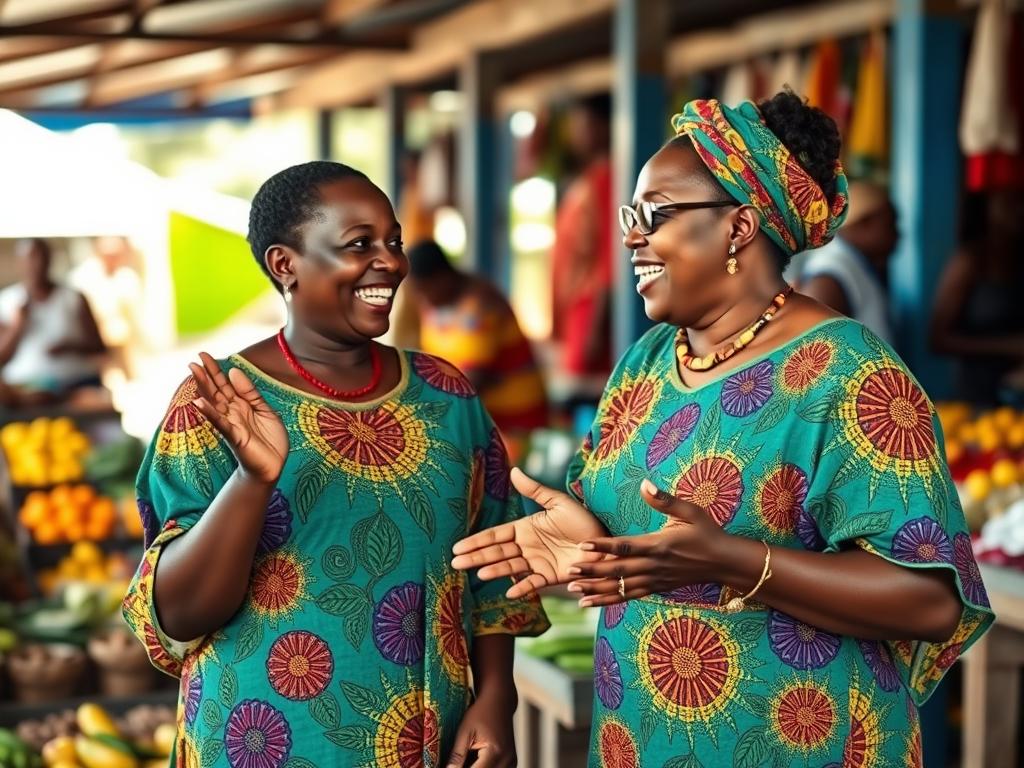
The versatile word habari (news) forms the foundation of a rich tapestry of greeting inquiries that extend beyond simple hellos. These questions demonstrate genuine interest in another’s well-being and circumstances—the cornerstone of meaningful connection in Tanzanian culture.
Family and Relationship Inquiries
Habari za familia? (ha-BAH-ree za fa-MEE-lee-a)
Meaning: “How is your family?”
This question acknowledges that in Tanzania, a person is never seen as an isolated individual but as part of an interconnected community beginning with family.
Response: Wote wazima (WO-teh wa-ZEE-ma) – “All are well”
Habari za watoto? (ha-BAH-ree za wa-TO-to)
Meaning: “How are the children?”
Children are treasured in Tanzanian society, and inquiring about them shows you understand our values.
Response: Wazima, asante (wa-ZEE-ma, a-SAN-teh) – “They are well, thank you”
Work and Daily Life Inquiries
Habari za kazi? (ha-BAH-ree za KA-zee)
Meaning: “How is work?”
This recognizes the dignity of labor and one’s contribution to community.
Response: Nzuri or Inaendelea (ee-na-en-de-LE-a) – “Good” or “It’s progressing”
Habari za leo? (ha-BAH-ree za LE-o)
Meaning: “How is today?”
A general inquiry about the present day.
Response: Nzuri tu (n-ZOO-ree too) – “Just fine”
Place and Journey Inquiries
Habari za nyumbani? (ha-BAH-ree za nyoom-BA-nee)
Meaning: “How are things at home?”
Home represents safety and belonging in our culture.
Response: Salama (sa-LA-ma) – “Peaceful”
Habari za safari? (ha-BAH-ree za sa-FA-ree)
Meaning: “How was your journey?”
In a country where travel can be challenging, this acknowledges the effort made to arrive.
Response: Safari njema (sa-FA-ree NJE-ma) – “The journey was good”
The Unspoken Language: Cultural Nuances of Swahili Greetings
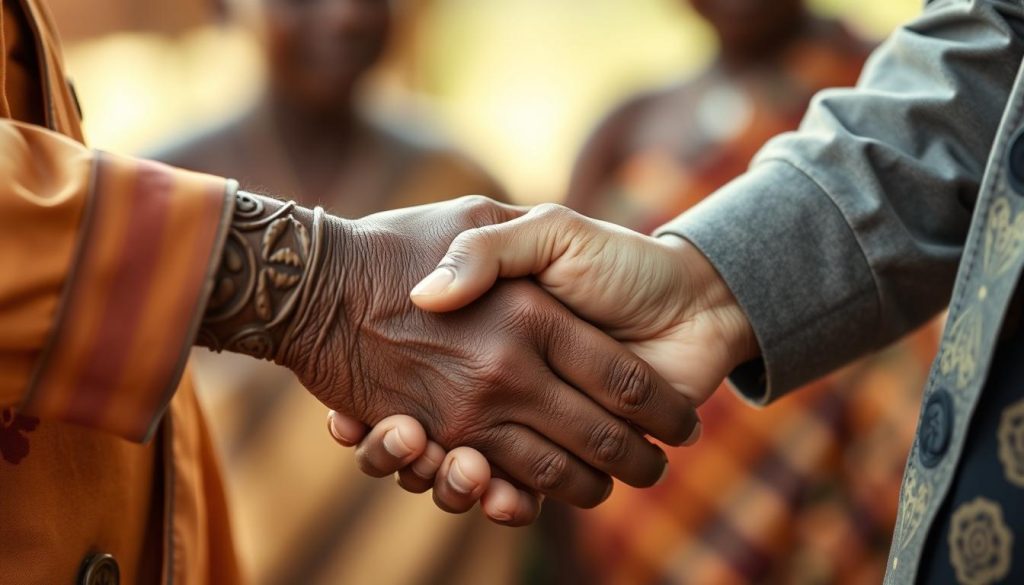
The handshake in Tanzanian culture is more than a gesture—it’s a conversation between souls
In Tanzania, what remains unspoken often carries as much meaning as the words themselves. The physical gestures, timing, and attention that accompany Swahili greetings transform simple phrases into profound exchanges of respect and recognition.
The Sacred Handshake
The Tanzanian handshake is an art form that speaks volumes about our values. Unlike the brief, firm handshakes common in Western business settings, ours is a gentle, prolonged connection—often held throughout the initial greeting exchange.
Elements of the Traditional Handshake
- Duration: Longer than Western handshakes, often lasting through several exchanges
- Pressure: Gentle rather than firm, symbolizing peace and friendship
- Left hand: Sometimes placed on the forearm or elbow as a sign of warmth
- Elder respect: Younger people may support their right forearm with their left hand when greeting elders
The Rhythm of Exchange
Proper greetings follow an unwritten choreography that demonstrates mutual respect. Rushing through greetings suggests the relationship holds little value—a cultural misstep that can close doors before they open.
The Proper Order of Exchange
- Initial greeting appropriate to age/status (Shikamoo/Hujambo/Habari)
- Response to initial greeting
- Inquiry about well-being (Habari yako?)
- Response about well-being
- Inquiry about family/home/work
- Response about family/home/work
- Only after these exchanges: introduction of the purpose of your visit or conversation
Eye Contact and Presence
In our culture, to truly greet someone means to see them—not merely to acknowledge their physical presence but to recognize their humanity. This recognition is expressed through attentive eye contact and full presence in the moment.
When greeting an elder, a slight lowering of the eyes shows respect without avoiding connection. Between peers, direct eye contact communicates honesty and openness. The eyes, after all, are windows to the soul—and in greeting, souls meet before words are exchanged.

Perhaps most important is the quality of attention brought to the greeting. In a world increasingly fragmented by technology and haste, the Tanzanian greeting remains a sanctuary of undivided presence—a moment when nothing matters more than the human being before you.
This quality of attention is not merely polite; it is sacred. It affirms that in the vast universe, this moment of connection between two souls matters. It is, in essence, what makes us human.
Swahili Greetings in Action: Practical Dialogues

The true rhythm of Swahili greetings is best understood through complete exchanges. These authentic dialogues demonstrate how greetings flow in different social contexts, helping you navigate real-world interactions with confidence and cultural sensitivity.
Scenario 1: Young Person Greeting an Elder
Young Person: Shikamoo, mzee. (Respectful greeting, elder.)
Elder: Marahaba, mtoto. Habari za leo? (I accept your respect, child. How is today?)
Young Person: Nzuri sana, asante. Habari za afya? (Very good, thank you. How is your health?)
Elder: Salama, Mungu akipenda. Habari za familia? (Peaceful, God willing. How is your family?)
Young Person: Wote wazima, asante. Na nyumbani kwenu? (All are well, thank you. And at your home?)
Elder: Tunaendelea vizuri tu. (We are just continuing well.)
Young Person: Ninafurahi kusikia. Nimekuja kuomba msaada kuhusu… (I am happy to hear that. I have come to ask for help regarding…)
Scenario 2: Friends Meeting After Some Time
Person 1: Mambo vipi, rafiki? (How are things, friend?)
Person 2: Poa sana! Vipi wewe? (Very cool! How about you?)
Person 1: Freshi kabisa. Habari za siku nyingi? (Totally fresh. News of many days?/Long time no see?)
Person 2: Ah, nimekuwa na shughuli nyingi. Kazi imekuwa ngumu. (Ah, I’ve been very busy. Work has been hard.)
Person 1: Pole sana na kazi. Familia je? (Very sorry about work. How about family?)
Person 2: Wote wazima, asante. Tuna mtoto mpya! (All are well, thanks. We have a new baby!)
Person 1: Hongera sana! Hebu twende tunywe chai tuongee zaidi. (Congratulations! Let’s go drink tea and talk more.)
Scenario 3: Tourist Meeting a Shopkeeper
Tourist: Habari za mchana? (Good afternoon?/News of the afternoon?)
Shopkeeper: Nzuri sana, karibu dukani. Habari za safari? (Very good, welcome to the shop. How is your journey?)
Tourist: Safari njema, asante. Tanzania ni nchi nzuri sana! (Good journey, thank you. Tanzania is a very beautiful country!)
Shopkeeper: Asante. Unatoka wapi? (Thank you. Where are you from?)
Tourist: Ninatoka Marekani. Jina langu ni Sarah. (I am from America. My name is Sarah.)
Shopkeeper: Karibu sana Tanzania, Sarah. Jina langu ni Juma. Unatafuta nini leo? (Very welcome to Tanzania, Sarah. My name is Juma. What are you looking for today?)
From Words to Worlds
These phrases come alive when exchanged beneath the vast Tanzanian sky. Our guides don’t just teach you Swahili—they welcome you into conversations that transform you from visitor to friend.
Navigating Cultural Waters: Common Mistakes to Avoid

Even with the best intentions, cultural missteps can create invisible barriers. Understanding common mistakes helps you navigate Swahili greetings with grace and authenticity.
What to Embrace
- Take your time with greetings; they are never rushed
- Ask about family, health, and home after initial greetings
- Use age-appropriate greetings (Shikamoo for elders)
- Maintain gentle eye contact while speaking
- Hold handshakes throughout the greeting exchange
- Learn the proper responses to each greeting
What to Avoid
- Using “Jambo” (primarily for tourists, rarely used by locals)
- Rushing through greetings to “get to the point”
- Using casual greetings (Mambo/Vipi) with elders
- Skipping inquiries about well-being and family
- Using firm, brief handshakes in Western style
- Responding with negative information to “Habari?” questions
Pronunciation Pitfalls
Swahili pronunciation follows consistent patterns that, once learned, make the language remarkably accessible. However, certain sounds require special attention:
- The ‘r’ sound: Pronounced with a slight roll, lighter than Spanish but not like English
- Stress patterns: Generally on the second-to-last syllable (ha-BA-ri, shi-KA-moo)
- Vowel clarity: Each vowel is pronounced distinctly, never blended or reduced
- Tone: While Swahili is not tonal like some African languages, rhythm and intonation matter
Cultural Context Errors
Beyond words and sounds, cultural context shapes the meaning of every exchange:
Misunderstanding Response Expectations
When asked “Habari?” or similar questions, responses are generally positive even if things aren’t going well. Detailed complaints are reserved for close relationships after initial positive responses.
Overlooking Non-Verbal Elements
A greeting delivered with the right words but wrong body language (rushed handshake, lack of eye contact) communicates disrespect despite correct vocabulary.
Misreading Social Hierarchy
Using overly casual greetings with elders or formal greetings with peers can create awkwardness. When uncertain, slightly more formal is safer than too casual.

Remember that mistakes made with genuine respect and a willingness to learn are almost always forgiven. Tanzanians appreciate the effort to connect through language, even when the execution isn’t perfect. The intention to honor cultural practices speaks louder than flawless pronunciation.
The Journey of Connection: Beyond Words to Understanding

The Swahili greetings we’ve explored are more than linguistic formulas—they are doorways to the soul of East Africa. When you speak these ancient words with understanding and respect, you transcend the role of observer and become part of our living cultural tapestry.
In a world that increasingly values speed over depth, Tanzanian greetings remind us that true connection requires presence, attention, and genuine care. These exchanges honor the fundamental truth that before we are tourists or hosts, customers or vendors, we are first and foremost human beings worthy of recognition.
As you journey through Tanzania, let these greetings be your first offering—a gesture of respect that acknowledges the wisdom and beauty of a culture that has thrived in harmony with nature for centuries. Watch how doors open, smiles broaden, and connections deepen when you begin with “Habari” or “Shikamoo” rather than “Hello.”
The effort you make to learn these phrases carries meaning far beyond the words themselves. It says: “I see you. I respect your culture. I am here not just to observe but to connect.” In this recognition lies the seed of transformation—for both visitor and host.
Where Language Becomes Experience
The true magic of Swahili comes alive when practiced beneath acacia trees, beside Maasai villages, or along the shores of Zanzibar. Our cultural immersion safaris weave language learning into every aspect of your journey, transforming phrases from this guide into living connections with the heart of Tanzania.
Join us for an experience where words become bridges between worlds.