Tanzania’s linguistic tapestry is as diverse as its breathtaking landscapes. Home to over 120 languages, this East African nation offers travelers a unique cultural immersion through its vibrant tongues. From the melodic flow of Swahili echoing through bustling markets to the ancient indigenous languages whispered in remote villages, Tanzania’s languages tell the story of its people: their history, traditions, and the soul of the land. Join us as we journey through Tanzania’s linguistic heritage, where each word serves as a bridge to understanding this magnificent country’s heart.
Tanzania’s linguistic diversity spans over 120 languages across its regions
Tanzania’s Linguistic Landscape: An Overview
Tanzania stands as one of Africa’s most linguistically diverse nations, with approximately 126 languages spoken across its territories. This remarkable diversity stems from Tanzania’s position at the crossroads of various African cultural influences, from Bantu migrations to Arab traders and European colonizers.
While this linguistic richness creates a fascinating cultural mosaic, Tanzania has managed to foster national unity through its language policy. The country has two official languages—Swahili (Kiswahili) and English—which serve as the primary means of communication in government, education, and business.
What makes Tanzania’s language situation particularly interesting is how Swahili has emerged as a unifying force across ethnic boundaries. Unlike many African nations where colonial languages dominate official communication, Tanzania has successfully promoted an African language as its primary national tongue.
“Language is the road map of a culture. It tells you where its people come from and where they are going.” – Rita Mae Brown
Official Languages of Tanzania
Tanzania’s linguistic policy centers around two official languages that facilitate communication across its diverse population. Understanding the role and status of these languages provides insight into how Tanzania manages its multicultural society.
Swahili (Kiswahili): The National Language
Swahili serves as Tanzania’s national language and primary means of communication. Approximately 90% of Tanzanians speak Swahili, though only about 10% speak it as their first language. Most Tanzanians learn Swahili as a second language alongside their ethnic mother tongue.
As the language of unity, Swahili is used in:
- Government administration and parliament
- Primary and secondary education
- Media and broadcasting
- Daily commerce and social interaction
- Literature and cultural expression
Tanzania made history in recent years by becoming the first sub-Saharan African country to use an African language throughout its entire education system, from primary through higher education.
English: The Second Official Language
English holds official status in Tanzania, primarily as a legacy of British colonial rule from 1919 to 1961. While less widely spoken than Swahili, English remains important in specific domains:
- Higher education (though Swahili is increasingly used)
- International business and diplomacy
- Tourism industry
- Higher courts and legal documentation
- Some government communications
English proficiency varies significantly across Tanzania. In urban areas and tourist destinations, many Tanzanians speak English comfortably. However, in rural regions, English speakers are less common. Most educated Tanzanians speak English as their third language, after their ethnic language and Swahili.
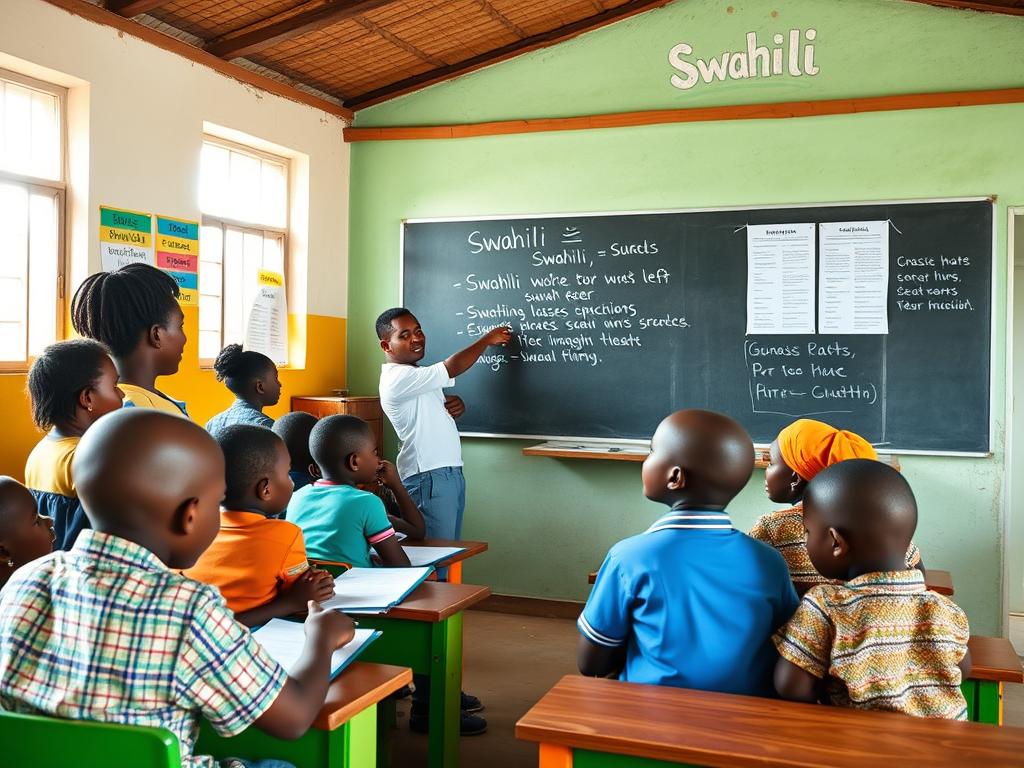
Swahili is the primary language of instruction in Tanzania’s education system
Swahili: The Heart of Tanzania’s Language Identity
Swahili (Kiswahili) stands as one of Africa’s most significant languages, with Tanzania at the center of its development and promotion. This Bantu language with Arabic influences has a rich history and plays a crucial role in East African identity.
The Origins and Evolution of Swahili
Swahili emerged along the East African coast as a result of interactions between Bantu-speaking Africans and Arab traders. The name itself comes from the Arabic word “sawahil,” meaning “coastal dwellers.” Over centuries, Swahili evolved into a sophisticated language with:
- A primarily Bantu grammatical structure
- Significant Arabic vocabulary influence (approximately 35%)
- Additional borrowings from Persian, Portuguese, German, and English
- Various regional dialects across East Africa
Following Tanzania’s independence in 1961, the first president, Julius Nyerere, championed Swahili as a tool for nation-building. His efforts transformed Swahili from a coastal trade language to a national symbol that transcended ethnic divisions.
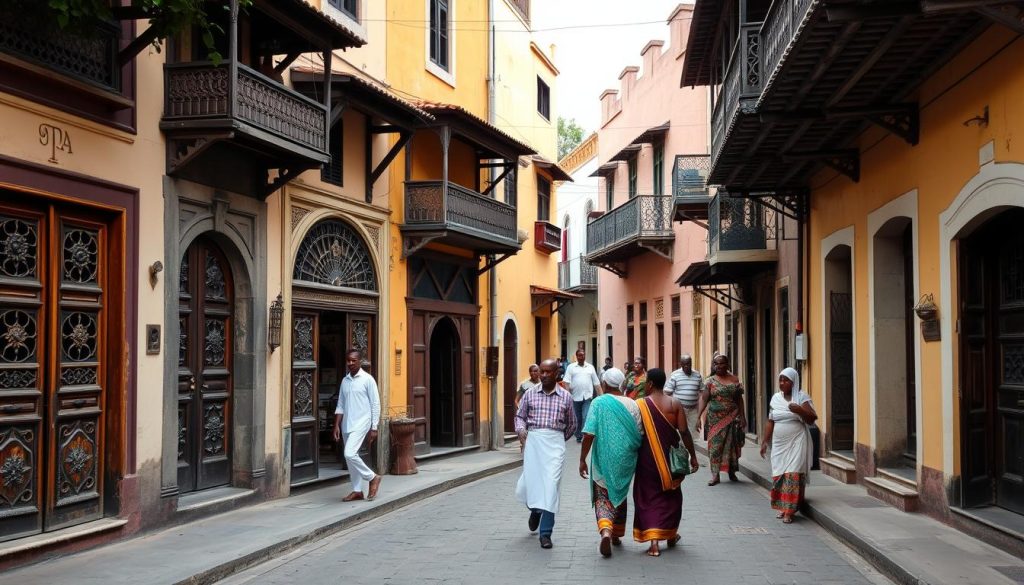
Stone Town in Zanzibar reflects the Arabic influences that shaped Swahili language and culture
Swahili’s Cultural Significance
Beyond mere communication, Swahili embodies Tanzania’s cultural identity in numerous ways:
Literature and Arts
Tanzania boasts a rich tradition of Swahili literature, including poetry (especially the traditional form called “utenzi”), novels, and plays. Notable Tanzanian authors writing in Swahili include Shaaban Robert and Euphrase Kezilahabi, whose works explore themes of tradition, modernity, and national identity.
Swahili also features prominently in Tanzania’s music scene, from traditional taarab to modern bongo flava, the country’s popular hip-hop genre that blends local rhythms with global influences.
Proverbs and Wisdom
Swahili proverbs (methali) serve as repositories of cultural wisdom and moral guidance. These sayings reflect Tanzanian values and worldview:
“Haba na haba hujaza kibaba” (Little by little fills the measure) – Emphasizing patience and persistence
“Asiyesikia la mkuu huvunjika guu” (One who doesn’t listen to elders breaks their leg) – Highlighting respect for wisdom and experience
Experience Tanzania’s Languages with Expert Guides
Our local Tanzanian guides are fluent in English, Swahili, and often several indigenous languages, ensuring seamless communication throughout your journey. Discover the authentic Tanzania with guides who can translate not just words, but cultural nuances.
Essential Swahili Phrases for Travelers
Learning a few basic Swahili phrases can transform your Tanzania experience. Locals deeply appreciate visitors who make an effort to speak their language, often responding with warmth and friendship. Here are some essential expressions to help you connect with Tanzanians during your journey.
Greetings & Politeness
| English | Swahili | Pronunciation |
| Hello | Jambo | JAM-boh |
| How are you? | Habari? | ha-BAH-ree |
| I’m fine | Nzuri | n-ZOO-ree |
| Thank you | Asante | ah-SAN-teh |
| Please | Tafadhali | ta-fa-DA-lee |
Practical Phrases
| English | Swahili | Pronunciation |
| How much? | Bei gani? | bay GAH-nee |
| Where is…? | …iko wapi? | EE-koh WAH-pee |
| I want… | Nataka… | nah-TAH-kah |
| I don’t understand | Sielewi | see-eh-LEH-wee |
| Help me | Nisaidie | nee-sah-EE-dee-eh |
Numbers & Basics
| English | Swahili | Pronunciation |
| One | Moja | MOH-jah |
| Two | Mbili | m-BEE-lee |
| Yes | Ndiyo | n-DEE-oh |
| No | Hapana | ha-PAH-nah |
| Water | Maji | MAH-jee |
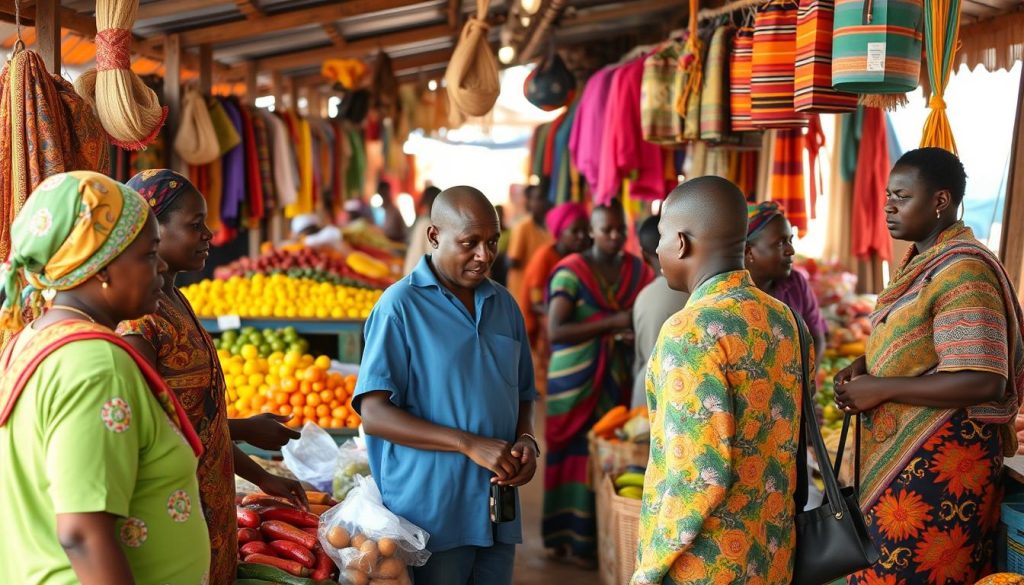
Swahili is the primary language of commerce in Tanzania’s vibrant markets
Pro Tip: Tanzanians greatly appreciate visitors who attempt to speak Swahili. Even simple greetings like “Jambo” (hello) or “Asante” (thank you) can create instant connections and warm smiles. Don’t worry about perfect pronunciation—your effort alone will be valued!
Indigenous Languages of Tanzania
Beyond Swahili and English, Tanzania’s linguistic landscape features a remarkable array of indigenous languages. These languages, primarily from four major language families, represent the country’s deep cultural heritage and ethnic diversity.
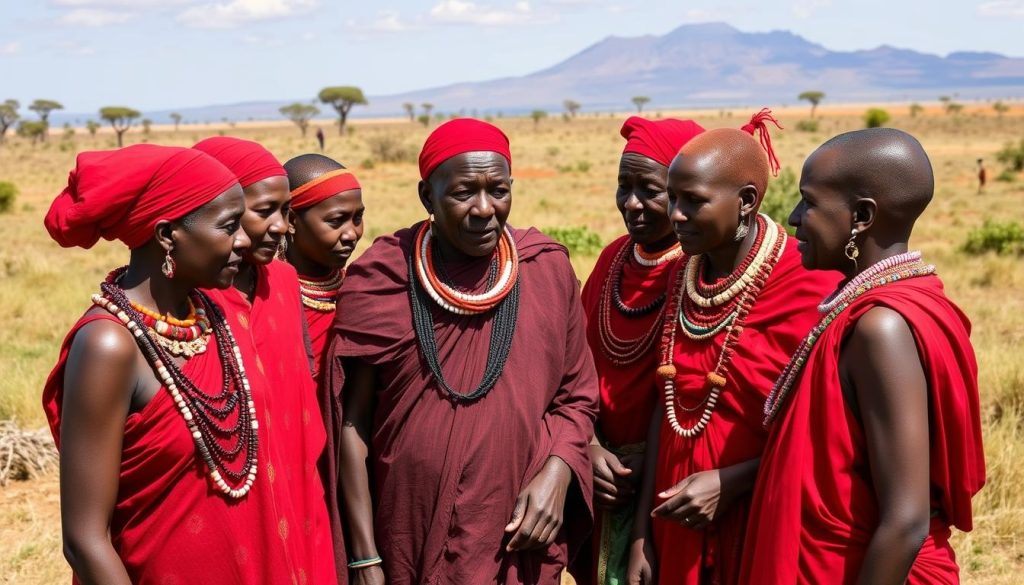
The Maasai people of northern Tanzania maintain their distinctive Maa language
Major Language Families in Tanzania
Niger-Congo (Bantu)
The largest language family in Tanzania, including:
- Sukuma (5.5 million speakers)
- Nyamwezi (1.5 million)
- Haya (1.3 million)
- Gogo (1.2 million)
- Hehe (1 million)
These Bantu languages share similar grammatical structures with Swahili but have distinct vocabularies and sound systems.
Nilo-Saharan
Primarily spoken in northern Tanzania:
- Maasai (Maa) (590,000 speakers)
- Datooga (200,000)
- Luo (80,000)
- Ngasa (endangered)
These languages are related to those spoken in South Sudan, Kenya, and Uganda, reflecting ancient migration patterns.
Afro-Asiatic
Includes Cushitic languages spoken in north-central Tanzania:
- Iraqw (462,000 speakers)
- Alagwa (53,000)
- Burunge (28,000)
- Gorowa (25,000)
Arabic, another Afro-Asiatic language, is spoken in Zanzibar and coastal areas due to historical trade connections.
Khoisan & Language Isolates
Rare language types with unique features:
- Sandawe (60,000 speakers)
- Hadza (1,000)
These languages are famous for their distinctive click consonants and represent some of Africa’s oldest linguistic traditions. Hadza is considered a language isolate with no known relatives.
Regional Distribution of Indigenous Languages
Northern Tanzania
The northern regions around Arusha, Kilimanjaro, and Manyara feature a diverse mix of languages:
- Maasai is spoken by the iconic pastoralist communities across the Serengeti and Ngorongoro areas
- Chaga (Kichaga) dialects are spoken around Mount Kilimanjaro
- Pare is found in the Pare Mountains
- Cushitic languages like Iraqw are spoken in the highlands near Karatu
Central and Western Tanzania
The central regions feature predominantly Bantu languages:
- Sukuma and Nyamwezi dominate the Lake Victoria basin
- Gogo is spoken in the central regions around Dodoma
- Nyaturu is found in the Singida region
- Ha is spoken near Lake Tanganyika
Southern Highlands
The southern highlands feature several major language groups:
- Hehe is predominant in the Iringa region
- Bena is spoken in parts of Njombe
- Kinga is found in the highlands near Lake Nyasa
- Safwa and Nyakyusa are spoken in the Mbeya region
Coastal and Eastern Tanzania
The coastal regions feature languages with stronger Swahili influence:
- Zaramo is spoken around Dar es Salaam
- Zigula is found in the coastal hinterland
- Makonde is spoken in the southeast near the Mozambique border
- Various dialects of Swahili dominate the immediate coastal areas
Language Policy and Education in Tanzania
Tanzania’s approach to language in education and public life has evolved significantly since independence, reflecting broader political and social goals. The country’s language policies have played a crucial role in nation-building while also presenting challenges for linguistic diversity.
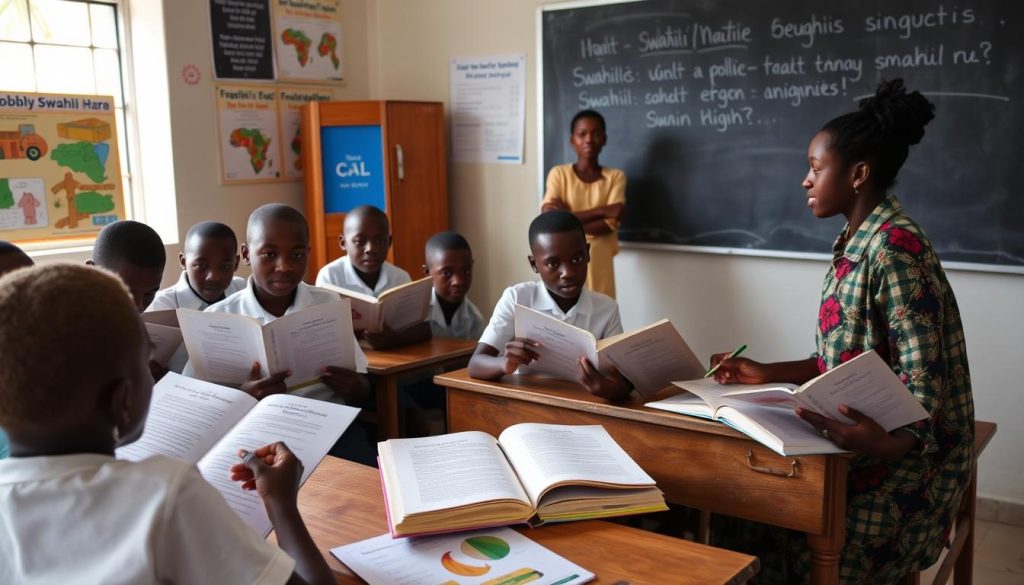
Tanzania’s education system now uses Swahili as the primary language of instruction at all levels
Historical Evolution of Tanzania’s Language Policy
| Period | Key Developments | Impact |
| Colonial Era (1885-1961) | German (until 1919) and English (1919-1961) were administrative languages. Swahili was promoted as a lingua franca for local administration. | Created a three-tier language system: European languages for elite education, Swahili for administration, indigenous languages for local use. |
| Post-Independence (1961-1985) | President Nyerere’s Ujamaa policy promoted Swahili as a symbol of national unity and African identity. Swahili became the language of primary education. | Swahili gained prestige and widespread use. English remained for secondary and higher education, creating a challenging transition for students. |
| Economic Liberalization (1985-2015) | English gained importance with globalization. Private English-medium schools expanded. Indigenous languages remained marginalized in formal settings. | Created educational inequalities between those with access to English education and those without. Indigenous languages continued to decline. |
| Recent Reforms (2015-Present) | Policy shift to make Swahili the language of instruction at all educational levels. Reduced emphasis on English in education. | Improved educational accessibility but raised concerns about international competitiveness. Indigenous languages remain excluded from formal education. |
Current Language Education System
Tanzania’s current education system reflects its evolving language policies:
Public Education
- Primary education: Taught primarily in Swahili
- Secondary education: Transitioning from English to Swahili as medium of instruction
- Higher education: Gradually incorporating more Swahili, though English remains important
- English is taught as a subject from primary school onwards
The shift to Swahili at all levels aims to improve educational outcomes by allowing students to learn in a language they understand better. However, it has sparked debate about international competitiveness.
Private Education
- Many private schools continue to use English as the medium of instruction
- International schools follow various curricula (British, American, International Baccalaureate)
- Growing demand for multilingual education that balances Swahili, English, and sometimes other languages
- Some religious schools incorporate Arabic or other languages
The private education sector often caters to families seeking stronger English skills for their children, creating potential socioeconomic divisions in language access.
Educational Challenge: One of Tanzania’s persistent educational challenges is the “language transition gap.” When students must switch from learning in one language to another (historically from Swahili to English after primary school), many struggle academically. The current policy aims to eliminate this gap by using Swahili consistently throughout education.
Tourism and Language in Tanzania
Tourism has significantly influenced language use and development in Tanzania, creating unique linguistic environments in popular destinations. For travelers, understanding these dynamics can enhance the cultural experience and facilitate smoother interactions.
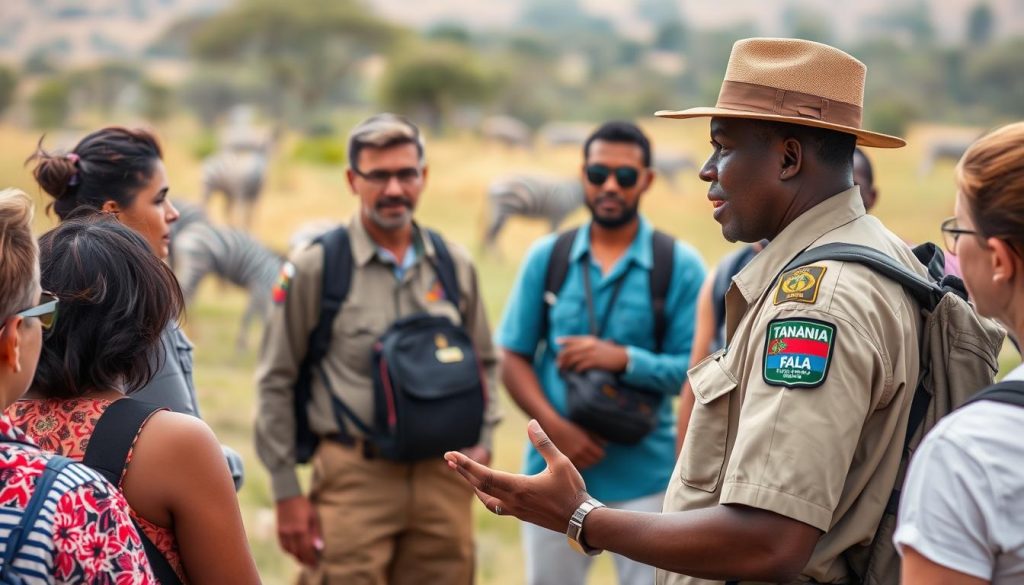
Safari guides often develop impressive multilingual abilities to serve international visitors
Multilingualism in Tourist Areas
Popular tourist destinations in Tanzania have developed distinctive linguistic environments:
Safari Circuits
In northern safari regions (Serengeti, Ngorongoro, Tarangire):
- Guides typically speak excellent English
- Many guides also speak other European languages (French, German, Italian, Spanish)
- Local Maasai or other indigenous languages may be used between staff
- Specialized “safari vocabulary” has developed, mixing English, Swahili, and Maasai terms
Zanzibar & Coastal Areas
In beach destinations and the historic Stone Town:
- Coastal Swahili dialects with stronger Arabic influence
- English widely spoken in resorts and tourist establishments
- Italian is common due to significant Italian tourism
- Arabic phrases persist in daily use
- Tourism has revived interest in historical Swahili poetry and literature
Major Cities
In Dar es Salaam, Arusha, and other urban centers:
- Urban Swahili slang and youth language
- English used in international businesses and upscale establishments
- Multilingual environments with various immigrant languages
- Growing Chinese language presence with increased Chinese investment
- Digital language mixing in social media and technology
Tourism’s Impact on Local Languages
The tourism industry has created both opportunities and challenges for Tanzania’s languages:
Positive Impacts
- Economic value for multilingualism, encouraging language learning
- Preservation of cultural expressions through cultural tourism
- Increased pride in Swahili as tourists attempt to learn it
- Development of language learning resources and translation services
- Cultural exchange through language interaction
Challenges
- Pressure to prioritize English over indigenous languages
- Simplification of cultural concepts for tourist consumption
- “Tourist Swahili” with altered pronunciations and meanings
- Commodification of certain phrases and expressions
- Uneven access to language learning opportunities
Language Preservation Efforts and Challenges
With over 40 endangered languages, Tanzania faces significant challenges in preserving its linguistic heritage. Various efforts are underway to document and revitalize these languages, though many obstacles remain.
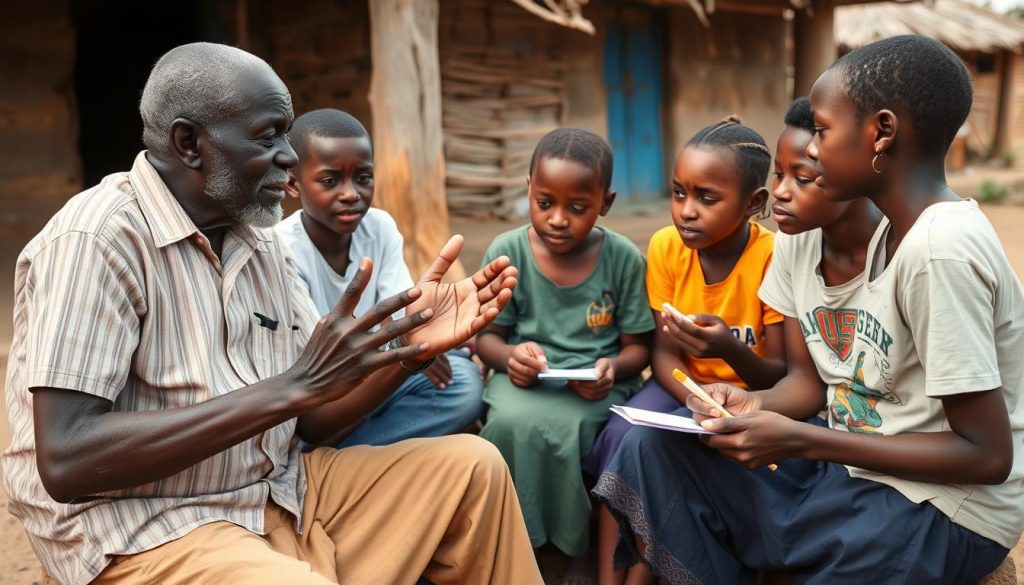
Intergenerational language transmission is crucial for preserving Tanzania’s endangered languages
Endangered Languages of Tanzania
Several Tanzanian languages face the threat of extinction:
| Language | Region | Speakers | Status |
| Hadza | Lake Eyasi area | ~1,000 | Endangered |
| Sandawe | Kondoa District | ~60,000 | Vulnerable |
| Aasáx | Northern Tanzania | Nearly extinct | Critically endangered |
| Ngasa | Near Mt. Kilimanjaro | ~100 | Critically endangered |
| Gorwaa | Babati District | ~25,000 | Endangered |
Preservation Initiatives
Despite challenges, several initiatives aim to preserve Tanzania’s linguistic diversity:
Academic and Research Efforts
- The Languages of Tanzania Project at the University of Dar es Salaam documents indigenous languages
- International linguists collaborate with local communities to create dictionaries and grammars
- Digital archives preserve recordings of endangered languages
- Academic publications raise awareness about linguistic diversity
Community-Based Initiatives
- Local cultural associations organize language festivals and competitions
- Community radio programs broadcast in indigenous languages
- Informal language classes teach younger generations
- Cultural tourism initiatives that highlight linguistic heritage
Challenges to Language Preservation
Several factors complicate efforts to maintain Tanzania’s linguistic diversity:
- Policy limitations: The focus on Swahili as a unifying language has inadvertently marginalized indigenous languages in education and media
- Urbanization: As people move to cities, they often shift to using Swahili and English for economic opportunities
- Generational gaps: Younger Tanzanians increasingly grow up speaking only Swahili, not their ancestral languages
- Limited resources: Documentation and preservation efforts lack sufficient funding and trained personnel
- Stigmatization: Some indigenous languages face negative attitudes as “backward” or “less useful”
- Media dominance: Swahili and English dominate television, radio, and online content
Critical Challenge: Tanzania’s current language policy prohibits the use of indigenous languages in formal education and broadcasting. While this policy has successfully promoted national unity through Swahili, it has accelerated the decline of the country’s rich linguistic heritage.
Practical Language Tips for Travelers to Tanzania
Navigating Tanzania’s linguistic landscape can enhance your travel experience significantly. Here are practical tips to help you communicate effectively during your journey.
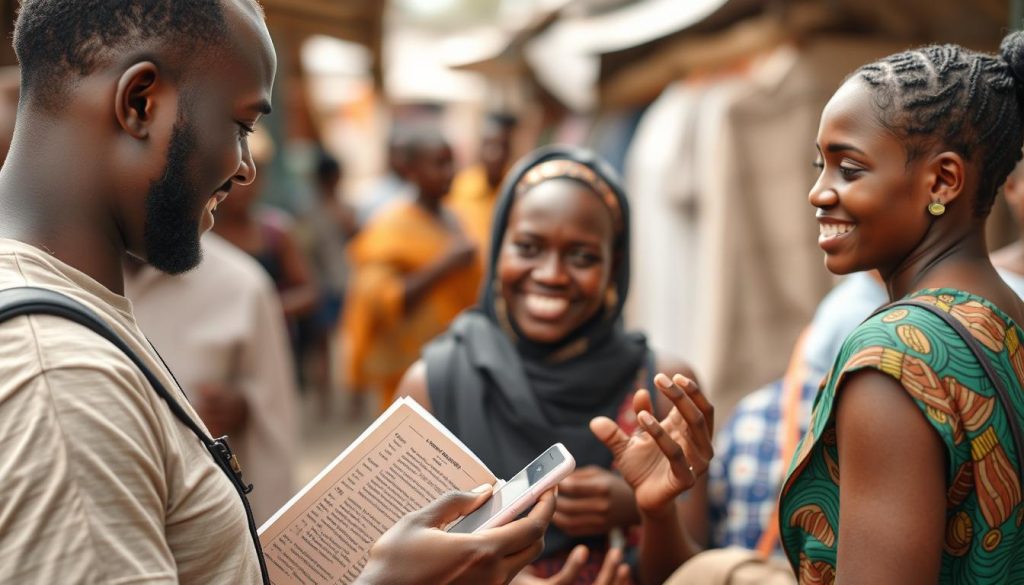
Even basic Swahili phrases can create meaningful connections with local Tanzanians
Before Your Trip
- Learn 10-15 basic Swahili phrases (greetings, thank you, numbers)
- Download a Swahili-English translation app that works offline
- Purchase a small Swahili phrasebook with pronunciation guides
- Practice pronunciation using online resources or language apps
- Familiarize yourself with cultural greeting customs
During Your Stay
- Begin interactions with proper Swahili greetings
- Ask locals to teach you new phrases and practice with them
- Use a notebook to write down useful words you learn
- Be patient and speak clearly when using English
- Learn location-specific terms (safari vocabulary, food names)
- Use gestures and visual cues when language barriers arise
Communication Strategies
- In tourist areas, English is widely understood
- In rural areas, find a local translator if needed
- Speak in simple, clear sentences without idioms
- Learn numbers for shopping and negotiating prices
- Ask your hotel staff or guide to write down key phrases
- Use respectful language and appropriate titles
Cultural Nuances in Communication
Understanding Tanzania’s communication etiquette can help you navigate social interactions respectfully:
Greeting Etiquette
- Greetings are essential and should never be rushed
- Handshakes are common and may be longer than in Western countries
- Use “Shikamoo” when greeting elders (a sign of respect)
- Ask about family and well-being after initial greetings
- Learn the appropriate greeting for different times of day
Communication Style
- Tanzanians often communicate indirectly to avoid confrontation
- Patience is valued over rushing to the point
- Humor is appreciated but sarcasm may not translate well
- Loud voices may be perceived as aggressive
- Maintaining eye contact shows attentiveness, but staring is impolite
Cultural Tip: In Tanzania, it’s considered impolite to eat, pass objects, or greet someone with your left hand. The right hand or both hands should be used for these actions as a sign of respect.
Future Trends in Tanzania’s Linguistic Evolution
Tanzania’s language landscape continues to evolve in response to globalization, technology, and changing social dynamics. Several trends are shaping the future of language use in the country.

Digital technologies are creating new forms of multilingual expression among Tanzanian youth
Emerging Language Trends
Digital Language Evolution
- Growing Swahili presence online and in software interfaces
- Development of Swahili AI and voice recognition tools
- New urban slang mixing Swahili, English, and digital terminology
- Social media creating written forms of previously oral languages
- Language-learning apps increasing access to Tanzanian languages
Educational Developments
- Continued implementation of Swahili-medium instruction at all levels
- Growing debate about balancing Swahili and English in education
- Potential for more flexible multilingual approaches
- Increasing demand for Chinese language education
- Possible future integration of major indigenous languages
Cultural and Economic Factors
- Growing international recognition of Swahili (now taught in many countries)
- Rising interest in indigenous languages through cultural tourism
- Expansion of Tanzanian music and film industries promoting Swahili
- Economic integration in East Africa strengthening regional Swahili use
- New migration patterns introducing additional languages
Balancing Unity and Diversity
Tanzania faces the ongoing challenge of balancing national unity through Swahili with preserving its rich linguistic heritage. Several possible approaches are being discussed:
- Mother tongue education initiatives: Introducing early education in indigenous languages before transitioning to Swahili
- Cultural heritage programs: Supporting language documentation and cultural activities outside formal education
- Media diversity: Relaxing restrictions on indigenous language broadcasting for cultural and educational content
- Digital preservation: Creating online resources, dictionaries, and learning materials for endangered languages
- Multilingual approaches: Developing educational models that value additive multilingualism rather than language replacement
“The future of Tanzania’s languages will depend on finding the right balance between the practical benefits of linguistic unity and the cultural richness of linguistic diversity.”
Conclusion: The Living Languages of Tanzania
Tanzania’s linguistic landscape reflects the country’s remarkable cultural diversity and complex history. From the unifying force of Swahili to the rich heritage of indigenous languages and the practical role of English, Tanzania’s languages tell the story of a nation balancing unity with diversity, tradition with modernity.
For travelers, engaging with Tanzania’s languages—even in small ways—opens doors to deeper cultural understanding and more meaningful connections. Whether you’re bargaining in a bustling market, conversing with your safari guide, or greeting villagers in a remote community, language serves as a bridge between cultures.
As Tanzania continues to evolve in our globalized world, its linguistic journey remains dynamic. The country faces important questions about preserving endangered languages while maintaining national cohesion through Swahili. Whatever the future holds, language will remain central to Tanzania’s identity—a living expression of its people’s resilience, creativity, and cultural wealth.
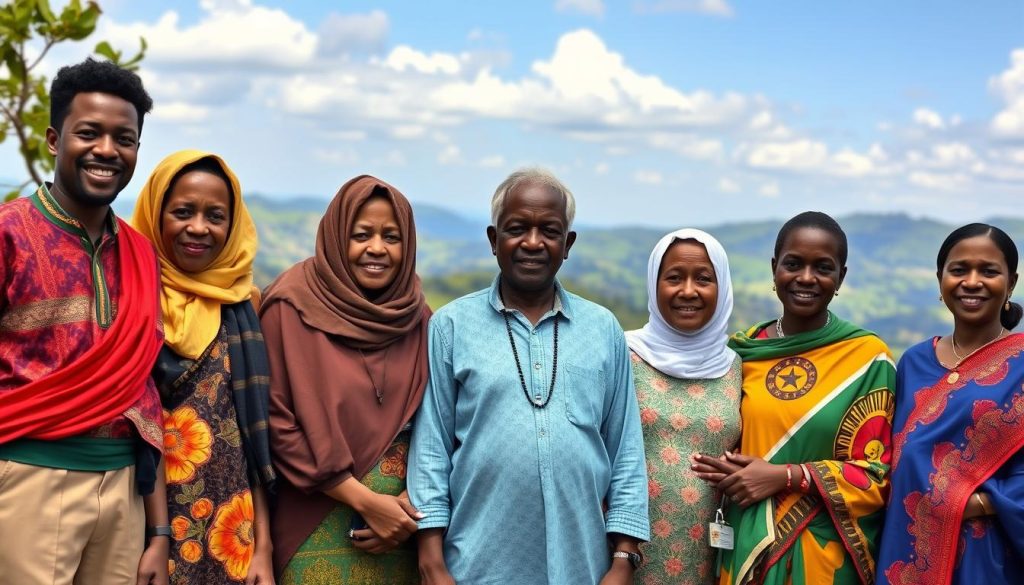
Tanzania’s linguistic diversity reflects the rich cultural tapestry of its people