
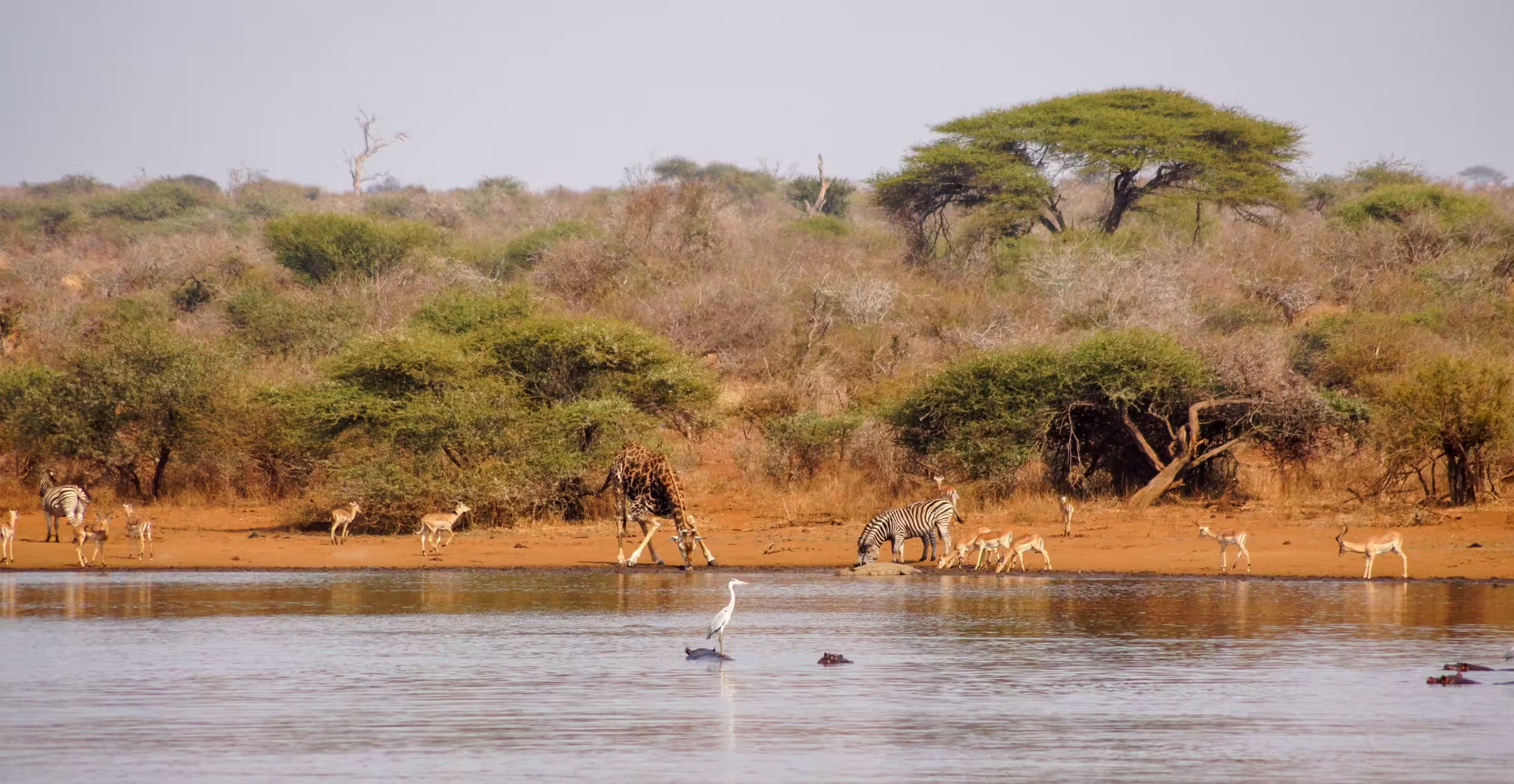
Ruaha National Park
Tanzania’s largest national park. Over 10% of East Africa’s entire lion population. Wild dog packs of 20+. Zero crowd pressure at sightings. The most exclusive game-viewing experience in Tanzania, in the park that most visitors never reach.
River, plains, and miombo —
all without another vehicle in sight
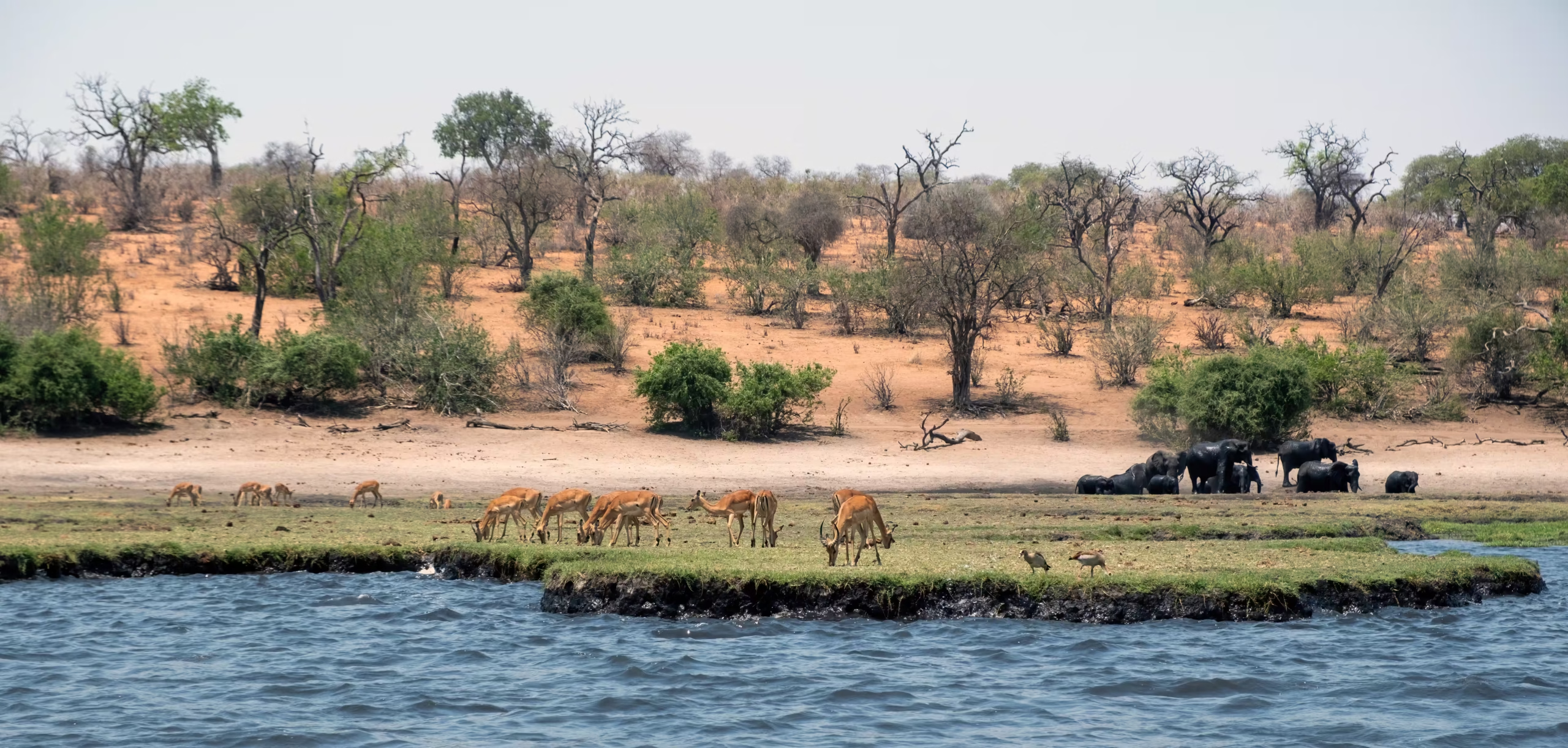
Great Ruaha River &
The Dry Season Concentration
The Great Ruaha River is Ruaha’s ecological spine. During the dry season from June through October, as the surrounding seasonal water sources dry, every large animal in this enormous landscape converges on the river. Elephant herds of 200+, buffalo aggregations of 1,000, zebra, kudu, eland, and waterbuck all compress into the river corridor — producing wildlife density that rivals anything in the northern circuit in a park with a fraction of its visitor numbers.
The predator concentration follows the prey. Ruaha holds more than 10% of East Africa’s entire remaining lion population — over 1,000 individuals in a single park. The prides have established territories along the river banks and are encountered on virtually every morning drive. Tanzania Adventure guide Peter Masanja has worked the Ruaha river system for 14 years and knows the current territory boundaries of seven major prides.
The defining characteristic of a Ruaha game drive is the absence of other vehicles. At the most dramatic sightings — a lion kill at the river crossing, a wild dog pack returning from a successful hunt at dawn — the Tanzania Adventure vehicle is often the only witness.

Miombo Woodland &
Species Found Nowhere Else
The miombo woodland of southern Ruaha holds species that do not exist in the northern circuit. Greater kudu — with their spectacular spiral horns visible above the woodland canopy — are present at densities available in no other major Tanzania park. Roan antelope, one of Africa’s rarest large herbivores, are regularly encountered in the open glades of the southern section.
The miombo is also Tanzania’s most productive wild dog habitat. Ruaha’s wild dog population is the largest in Tanzania, and the open woodland structure provides observation conditions unavailable in denser environments. Pack hunts — cooperative, high-speed pursuits involving 15 to 25 individuals — are the most complex predator behaviour visible from a vehicle anywhere in Tanzania.
Tanzania Adventure’s walking safari programme operates in the southern miombo section — three days on foot with Peter Masanja and an armed TANAPA ranger. The walks produce elephant encounters at 30 metres and the ecological literacy that vehicle driving can approximate but never fully deliver.

The Open Plains &
All Six Predators
The central grasslands around Msembe are the zone where all six large predators — lion, leopard, cheetah, wild dog, spotted hyena, and striped hyena — can theoretically be encountered in a single day’s drive. This combination does not occur in any northern circuit park.
Cheetah in Ruaha use the open grassland in the same way they use the Serengeti — elevated termite mounds as observation platforms, mid-morning hunt windows, and the explosive sprint. The difference from the Serengeti: a Ruaha cheetah hunt is observed from a vehicle that is the only one present.
The striped hyena — Africa’s least-studied large carnivore — is present in Ruaha at densities unavailable in most protected areas. Tanzania Adventure has recorded regular striped hyena sightings in the central zone during 14 years of operation here.

Wilderness Camp &
Three Days on Foot
Tanzania Adventure’s Ruaha Wilderness Walking Camp is our most exclusive programme. Three nights in a mobile fly-camp on the banks of the Great Ruaha River, accessed by charter aircraft from Iringa. No roads, no other camps within 15 kilometres, no schedule except what the wildlife and the light dictate.
Days are spent on foot with Peter Masanja — who was born within the park boundary — reading the landscape at walking pace. The programme accommodates a maximum of four guests and runs by private charter only. This is Tanzania Adventure’s single most-requested programme for returning clients.
Walking safari ecology is a fundamentally different language from vehicle driving. The tracks of a leopard that crossed the path two hours ago. The alarm calls of grey hornbills indicating a predator’s position 200 metres away. Peter teaches this language in three days.
What Ruaha Contains
That No Other Park Offers

Planning Your
Ruaha Safari
The Logic of the Southern Circuit
Ruaha is the anchor of the southern Tanzania safari circuit. Its size — 20,226 km², larger than Wales — and its extraordinary predator density make it the principal wildlife destination in southern Tanzania. Combined with Nyerere (Selous) for boat safaris, Mahale for chimpanzees, and Mafia Island for the marine experience, the southern circuit constitutes a complete Tanzania safari programme that rivals the northern circuit in wildlife quality while vastly exceeding it in exclusivity.
Tanzania Adventure recommends the southern circuit for clients who have already done the northern circuit and want to understand what the rest of Tanzania contains. For clients who want to do both on a single trip, a fifteen-day programme covering the full northern circuit followed by a seven-day southern extension is Tanzania Adventure’s most comprehensive single-country programme.
Fly-In Access
Ruaha is accessible by scheduled flight from Dar es Salaam (1.5 hours, via Coastal Aviation or Auric Air) and by charter from Arusha with a refuelling stop. Tanzania Adventure manages all fly-in logistics from the point of international arrival. The transfer to any Ruaha camp takes 10 to 20 minutes from Msembe airstrip by vehicle. There is no road access route that Tanzania Adventure uses for international safari clients.
Guide Standards
Peter Masanja — Tanzania Adventure’s Ruaha guide — has worked this park for 14 years and holds his TANAPA walking guide certification, wilderness first aid qualification, and is currently contributing to the Ruaha Carnivore Project’s wild dog tracking programme. His operational knowledge of the park exceeds that of most researchers working in the park on a seasonal basis.
The Walking Safari Difference
Vehicle-based game viewing and walking safari are not interchangeable experiences. The vehicle provides elevation, coverage distance, and a platform for extended observation of large mammals. The walk provides ecological literacy — the ability to read a landscape in motion, understand the cause-and-effect relationships between species, and perceive the ecosystem as a continuous process rather than a series of sightings.
Tanzania Adventure’s three-day wilderness walking programme in Ruaha is designed around the river corridor, where the wildlife concentration guarantees consistent big-game encounters on foot. The fly-camp format — lightweight, mobile, positioned by daily intelligence — means the camp is always where the wildlife is rather than fixed at a single location.
Conservation: The Ruaha Carnivore Project
Tanzania Adventure contributes a per-client fee to the Ruaha Carnivore Project, which conducts long-term research on lion, wild dog, and cheetah population dynamics in the greater Ruaha-Rungwa ecosystem. The project also runs a human-wildlife conflict mitigation programme with livestock-herding communities on the park boundary — providing guard dogs, predator-proof livestock enclosures, and community compensation for verified predator kills. Tanzania Adventure’s contribution directly funds these community mitigation activities.
What to Expect Logistically
All Ruaha accommodation is fly-in access only for Tanzania Adventure clients. Camps range from basic tented camp level (comfortable, basic facilities, generator power) to luxury tented lodge. Tanzania Adventure operates at mid-range and wilderness fly-camp levels — clients who want ultra-luxury accommodation will be directed to specific operators who manage that accommodation standard. Accommodation level does not affect guide quality or game drive access.